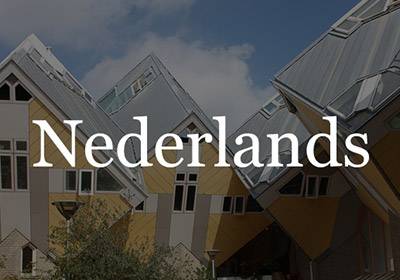
The Dutch-speaking Low Countries of the Netherlands and Belgium are home to over 20 million speakers in northwestern Europe. Dutch is also spoken in Surinam and the Dutch Antilles and serves as a significant second language in Indonesia and South Africa. Afrikaans which grew out of 17th century Dutch is similar to modern Dutch.
The Low Countries were a world power and cultural leader in the 15th-17th centuries. Today the Dutch are leaders in international business and politics. The Netherlands today is the third biggest foreign investor in the U.S., with the world's 8th largest GDP. The Dutch are noted for their progressive policies towards gay marriage, soft drugs and euthanasia, their social welfare system, and their political aptitude for compromise and conciliation. Brussels is the capital of the European Union. The Hague houses the International Court of Justice. Shell, Unilever, and Philips number among leading Dutch international corporations.
In the cultural realm, the Dutch produced painters such as Rembrandt, Vermeer, and Van Gogh and world leaders in photography, architecture, industrial and graphic design, and fashion including M. C. Escher. Noted Dutch and Belgian philosophical and literary figures include Erasmus and Spinoza and, more recently, Cees Nooteboom, Harry Mulisch, Hugo Claus, Monika van Paemelas, and children's author Annie M.G. Schmidt. In science and technology, the Dutch are known for their research in agriculture, aquatic engineering, and city planning.
For English speakers seeking to acquire a second language, Dutch is one of the easier languages to learn because of its similarities to and vocabulary shared with English and German. The study of Dutch particularly rewards anyone with interests in art history, the history and culture of the Netherlands, Belgium or the East Indies, Germanic linguistics, Indonesian legal studies, or international law and business.