Texas Politics
 
   
Texas Politics Speakers Series Transcripts

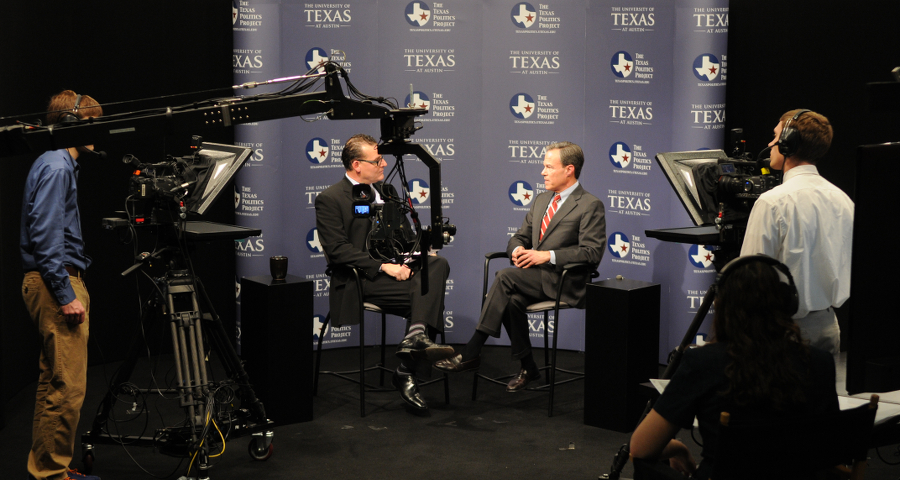
Rick Noriega in "An Afternoon with the Representative" for the Texas Politics Speaker Series on March 25, 2008.

Dr. James Henson: Welcome everybody. We've very happy to have Representative Rick Noriega here with us today. Rick Noriega was elected to the Texas House of Representatives representing District 145 in Houston in 1998 and has served 5 terms in that body. He currently acts as the budget and oversight chair, the defense affairs in State Federal Relations Committee and also sits on the appropriations committee. He is currently the Democratic Party candidate for the US Senate currently held by Senator John Cornyn. Representative Noriega completed his undergraduate education in 1984 with the help of an ROTC scholarship at the University of Houston, receiving his commission in the United States Army. He went on to earn a master's degree in Public Administration in 1990 from the Kennedy School at Harvard, where he was also an editor of the Harvard Journal of Hispanic Policy. He was elected to the Texas House, after stints, doing lots of interesting things, it seems to me. He served as a Project Manager for communities and schools, he taught in the Houston Independent School District and the Houston Community College system. He worked as a staffer in the in the Texas State Senate and worked as part of the government of--governmental affairs team at CenterPoint Energy. After reelection to his second term in the Texas House in November of 2000, he continued to serve on the Human Services and Transportation Committees and his legislative package that season included, you know, several bills but most notably, he carried House Bill 140 which made Texas the first state in the country to provide in-state tuition rates and financial assistance for certain immigrant children. In many ways, a precursor to the much discussed DREAM Act right now. And in that way was very much ahead of the curve, it seems to me. He was elected to the fourth term in the Texas House of Representatives in November of 2004, at the very same time that he was serving in the US Army in Afghanistan. He is very busy these days as you might imagine and so, we very much appreciate him making the time to come to the University of Texas at Austin. So please welcome Representative Rick Noriega.

(Applause.)

Representative Noriega: Thanks very much. Oh, thank you. Well, thank you Dr. Henson for the opportunity to be here--to be here at this particular Texas politics project. This is a very important project for the purposes of engaging people, Americans and Texans in discourse in our democratic society that we're able to discuss and have clear differences of opinion in which case--or where rather we want to take this country and what our vision and what our--what our ideas are in leadership from a policy perspective. And I think that the piece, Dr. Henson, that is important as anything, has been your multimedia component of your program. Separate the guest speaker piece which is also important and incidentally, you're--don't feel left out. This is not the only venue that my opponent has not wanted to appear jointly. There had been several, just this past weekend, the combined Law Enforcement Association of Texas. Just today, the Fort Bliss Military Base in El Paso had a radio program as well, did not have time or had a scheduling conflict to appear. The multimedia component of your program is most important in a society today that in a traditional paradigm, most looks at or often looks at how much money do you have to be relevant or to be credible or to be viable. And if you look in a traditional sense, each and every one of us that are here, as regular Texans and you have a difference of opinion and you have a viewpoint of wanting to stand up and have your voice heard to fight for Texas families because you feel that the government has been off track, both state and federally. What do you do then to make that voice heard? Well today, candidates have come into pretty much three traditional areas of offering themselves, of what we've seen. On the one hand, you have a candidate who is a self-financed candidate, someone of a--someone whose last name maybe Coors who runs for the Senate in Colorado or someone who--a Rockefeller or someone of that nature that can sell finance. Another kind of candidate is someone that may be a celebrity, an Arnold Schwarzenegger or Kinky Friedman or Jesse Ventura, et cetera. The other--the third kind of candidate is a candidate that offers himself up and they get caught into a traditional paradigm or vision by many that you're not viable because you don't have the resources to compete as if the determining factor based on your relevance is not your ideas, it's not what you stand for, it's not your track record but rather or not, do you have the money, do you have the money? The fourth way, the fourth way is to have a candidate that comes forward with ideas not imposed on the public from the top down but rather someone who comes to the public as one of you. I would give this the example of Anne Richards. It's time that we took back Austin for the people of the state of Texas, someone along those lines and we have seen races and candidacies in our--in our nation's history that have followed that path which I think is important and where the multimedia component of this comes in is this. In a state, such as Texas, a guy like myself who--whose parents neither one of them graduated from high school, that greatest generation that was still we had an economic environment where they worked real hard and they gave my brother and sister and me everything that they had and we were able to, you know, had a little bit better perhaps than what they did; that that American dream piece that you could--you can do that. That a person like that could bring themselves and offer themselves to the public for service and can still be viable, be credible, have ideas and vision and demonstrated leadership that you wanto to take this country or the state in a different direction because you're worth it and our future generations are worth it. The multimedia piece that has helped level the playing field to a large degree in a state such as -- as big as Texas with 19 media markets that whether the pundits in Washington or the pundits in wherever else will say, "Well Texas, we just can't--we just can't compete in Texas. We just--I mean it's just a done deal. It's--your voice or your candidacy really isn't relevant." The thing that has now made all of you relevant is multimedia. It's the ability now to get online, to Twitter or to text message you, to talk to over 200,000 people a few times a week where in a traditional paradigm, can you imagine folding and licking stamps and printing and all of those things? This new medium for organization and for having the resources to be able to be viable, to be competitive, to be relevant, has changed the dynamic of our democracy to a large degree. Over the last two election cycles, we have seen whether it was what Howard Dean was able to do the last election cycle and what then Karl Rove was able to do in term so fine tuning it to wedge in and pick out and motivate certain groups for winning all the way to this election cycle where we have seen what Senator Obama has been able to do in mobilizing perhaps the largest email list in the United States, perhaps the largest in the United States and this particular venue, this particular medium is gonna continue to evolve. It's going to--we're going to see different things this election, different outcomes as a result and we'll see different outcomes in future elections. And so, the component that you offer within your program, the multimedia component is important and I want to thank you for your work that you've done and for the opportunity to be here. I don't have to tell you guys this. For a 50-year-old man and you heard a little bit about my history and it sounds kind of like I hadn't been able to hold a job, I will tell you in my 50 years, this is the most critical election I have ever witnessed in my adult life time -- in my adult lifetime. There is not perhaps a policy you can turn to that has not failed. Pick one. Failed economic policy, failed energy policy, failed immigration policy, failed education system, failed health care policy and the list goes on. And those of you that are here recognize, especially those of you that are students of political science in particular know, that your segment of our nation's population are those that participate the lease but have the most to lose, based on the future leadership of the state and this country. Traditionally, historically, election by election, those of you in this room that represent a particular age group are those that traditionally participate the least and have the most to lose and that's just a fact. And so, this election, though we look at these failed policy issues that I just described and I invite you to go in a multimedia fashion to my website, www.ricknoriega.com to read a little bit more in depth about the plans and the vision that we've provided when we talk about our energy policy of creating 50,000 new jobs over the next 10 years, of how we move to energy self sufficiency to demonstrate the leadership of how we get there because I truly do see this as a--as a national security issue, of having a buffet of choices in terms of our--our energy or if it's talking about education policy, most important to you that you recognize not just this semester but boy wait 'til your January bill comes in, for coming--for attending this university. Check out what it's going to be, and the cost of your books and everything else and your student loans and I've stood at the front mic in the Texas Legislature to say that deregulating tuition rates in this state was going to be a tax on the middle class and I've been proven right, unfortunately, how tuition rates have skyrocketed in the state. So when you look at our plan on our web site, www.ricknoriega.com, you will see where we discuss how we invest in our intellectual capacity growth so that we continue to be the greatest nation in the world in terms of student loans, grants, incentives for Math and Science, how we look at--how we honor public service as a way for a quid pro quo from the government so that you then can have some offsets based on the cost of--of tuition and college cost. Check it out, look at it. Health care policy in the state, it's incredible. How the costs continue to rise and the care continues to decline, those that can afford it and those that cannot. My opponent says that Texas ought to be the model for the rest of the nation in terms of healthcare policy; number 1 in the state -- number 1 in the state of children who are uninsured -- number 1 in the state with children who are uninsured. We should all be just appalled at that as Texans. We should just really take issue with that. Healthcare premiums have been going up 80 percent since over the course of the last six years. My opponent has actually prescribed a plan, a McCain-Cornyn plan that talks about taxing the middle class in terms of healthcare cost and trying to get you off employer health insurance. I fundamentally believe that's wrong, a wrong way to go. So we have all of these failed policies but I think--I think I need to tell you what I believe this election is more about than anything else. I believe this election is about regaining the trust both domestically and internationally in governance and people who serve in whatever capacity. We have a real breakdown in trust right now. Just over the course of the last two to three weeks, when we were told all was well on the economic front, we now, you and I, have now had to or are going to have to pay the bill on a -- over 700-billion dollar bail out for the mismanagement of those on Wall Street and those in Washington, D.C. You and I are going to have to pay that bill. Now, today, some of you may try to figure out, okay, with the 40 or 50 bucks I budget a week for my meals 'cause I may have a meal plan but I may not want to eat what's in--what's in the dining facility today, I may want to go over here to the Noodle House on Guadeloupe Street and get a bowl of noodles. Well, am I going to be able to afford it? Am I going to be able to afford it this week because I may want to save up for a new computer? Well, my opponent believes that we don't have to have a pay-as-you-go government. He fundamentally said that today in the front page of your Austin American-Statesman. As a Texas family, as an American family, this is a vision that you do not have to have the money to pay for things, that I can gamble them away or gamble investments away in a fiscal policy. You know why? 'Cause I can always come back to the suckers and get the money. That's what we're faced with and that's why we have a fundamental breakdown of trust right now with our government. Even the international community read--pick up any paper in Texas or anywhere else today. In this week--this past weekend, the banks of Europe and everywhere else were scrambling. They were scrambling based on our own ineptness here in this country and they're saying that we will no longer have the dominance of America as financial institutions, we will have multipolar environment for financial institutions. And why? Because they say we can't believe the Americans anymore of what they say they have in their checkbook. That's what they're saying. We've lost trust on this end in terms of our domestic policy and we've lost trust in addition, on the other end, in the international community. And fundamentally, we are going to have to reestablish leadership and regain the trust in our governance that you and I expect as Texans and as Americans. Fundamentally, this role is that, "I'm supposed to be a good steward of your trust to stand up and do what's right for Texas families." Bottom line, not the interest of Washington, D.C. My opponent's taken over 4--about 4 million dollars from the money houses and so forth in Washington, D.C; over a million dollars from the insurance companies and the HMO's, same amount of money from the big oil companies. And so, this election is fundamentally about trying to restore that public trust. Now, I'm going to leave it there because I fundamentally believe as well that the future of this state and the future of this country is really in your hands. It really is, what kind of state and what kind of nation we're going to be and that's why it was important for me to be here with you. That's why it was important for me to be here with you. Thank you Dr. Henson for letting me be here.

Dr. James Henson: Thank you very much. Questions from the audience?

(Applause.)

Dr. James Henson: Yes? Start over here in the middle. And again, yeah, wait for the microphone. Thanks for remembering.

Male Voice: Representative Noriega, thank you. I wanted to go ahead and ask. I believe it's the comptroller or somebody like that has put forward they're going to restart the Texas Tomorrow Fund. What's your opinion on that now that it's--instead of being 12,000 dollars, it's going to cost like 39,000 dollars or something like that? Can you tell me about that?

Representative Noriega: Interesting. Well, I'm glad number 1. I'm glad. I've been a long supporter of the Texas Tomorrow Fund, very good program. It was unfortunate in 2003 when the state was faced with budget deficit of about 10 billion dollars or somewhere around that scale. I find that ironic to [inaudible] that California is now asking the federal government for a bail out of about 7 billion dollars but Texas was able to find as a pay-as-you-go state, was able to find, despite the fact I disagreed with some of the priorities of our cuts, nonetheless, we were able to pay our bill, that legislative session. That was one of the things that got put on freeze, that got put on hold because in 2003, to try to balance the budget, the leadership of the legislature decided that we needed to deregulate college tuition rates which I thought was a bad policy again because I think it would--I thought it would have put a tax on middle class families. You know, the very--those that are impoverished, there's going to be programs for them. Those that are extremely well off, there's not a problem. It's all of that middle America that was going to be hurt which is what we've--what we've seen now as a result. I thought it was real disappointing that the state of Texas then said we--we are not going to continue this program. I'm very happy that we're able to--to start it back again even though there are cost increases. I do support what some of the universities are doing like Texas A&M and they may do it here as well, Dr. Henson, I'm not sure but to try to lock in your--try to lock in your tuition in your first year. In other words, actually look at okay, let's say this semester is going to cost you 7000 dollars a semester and in 4 years, that same semester is going to cost you 8500. Well, what we're going to do is we're going to go ahead so you can budget and you can plan. We're going to charge you 7500 for the next 4 years to try to lock that in so that you know what you're going to have to save up for our work for or take out loans for to pay, and that's part of our education plan too if you'll go to www.ricknoriega.com.

Dr. James Henson: Over here.

Male Voice: Thank you. You've mentioned that--that this particular election is the most important one that you believe you've been a part of in your adult life and also that that younger people who have the most to lose aren't getting involved and I think that for a younger person, you feel like you're bombarded by all this multimedia you're talking about. There is so much out there and we might not have the foundation an older person has in terms of the--your values and your basic beliefs about politics, and what do you think is a good advice for a young person trying to kind of sift through that media. What's--what's the good place to start to learn about candidates and to learn about issues?

Representative Noriega: You know, obviously, I think--I think, by and large, our print publications do a good job of trying to keep everybody abreast and informed. You know, in a new environment, in a new environment we're in, you know, for laughs, I like to watch Jon Stewart but you know, you're right. You are bombarded by a lot and I think you've got to look at, you know, some of the traditional credible voices and then--and it's okay. I mean I watch--I watch CNN, I watch MSNBC, and I watch Fox. I like to get a feel of all the different things that are being put out there and you know, I like to read the--all the local papers and you know, New York Times, the Wall Street Journal and so forth as well. And then there are a lot of blogs I like to read too that I know that are credible, that I think that aren't shrill and then I, you know, I read some of the shrill ones too but I think that--I think it's just income--I mean look, I fundamentally, I have faith in--especially this generation's good judgement. We are seeing a level of activism this particular go around like we perhaps have never seen from young people of--of our country and of our state and I'm glad about that. I mean I think that's exceptionally good thing. And so, you know, I wouldn't point you to one specific thing other than you really do need and--and that includes books as well. I think I just started The War Within, Bob Woodward's book and I read Scott McClellan--a good portion of Scott McClellan's book when I was on annual training this past summer and--and other things, World War IV, just kind of a little bit to the right in terms of--and so, all of that's important. You're in a great institution especially here where you have so much information coming at you and I envy you. I, that time when I was in graduate school that it was just constant information, it was like a kid in the candy store, having speakers and the like and having great, great discourse and debate within the classroom, all those things. So I envy you to some degree and I--and I just have faith and confidence that all of you are going to make the right choices.

(Pause.)

Male Voice: [Inaudible], with the ever growing gulf, economic gulf between the richest Americans and the rest of us, the last 8 years of the Bush administration has been described as a huge transfer of wealth and with the recent signing of the bail out bill, I've heard that described as a completion of the transfer of debt to the middle class. What is your view on the bail out that was executed last Friday and how would you have voted on that exact bill?

Representative Noriega: I would have voted against it and I'll tell you why. You've accurately described an enormous amount of a burden now that has been placed on regular taxpayers for the mismanagement and in some--and perhaps even malfeasance of some. There were not enough regulatory teeth put into what was discussed. There was not enough accountability. We need to have cops on Wall Street just like we have cops on Main Street and to go after those that are responsible. There wasn't a fundamental look at how do we fix the problem of a lot of these poisonous instruments, these financial instruments that had been allowed to be used out there. There weren't--there weren't hearings, there weren't discussions, none of that occurred to make sure that we--we patch the hole in the roof and not just mop up the water on the floor. None of that was done in a way that--in a way that I could have been for. In addition to--what was real disturbing to me this weekend in the New York Times was describing that Secretary Paulson was putting together his team of experts to figure out what they were going to do. I want to say that again. This weekend, Secretary Paulson was putting together his team of experts to decide what they're going to do. Now I ask my friend over there at the MS4, it's--a student of Military Science over here. If you've ever heard anything, I have, I've heard it before. As a unilateral invasion, Iraq was a similar kind of blunder where you're making this stuff up as you go along. You're making it up as you go along and we just wrote a 700-billion dollar blank check to buy the worst debt that--that folks had gambled away. And so, that's why this election is critical about restoring public trust. My opponent now likes to say, "Well he wrote a letter two years ago". Well, I feel real--real self assured when we have another trillion dollar debt that the junior senator of this state will write another letter. That's why we've got to have people that are willing to stand up and fight for Texas families. This state and this nation has given me that opportunity on several occasions and in harm's way and not in harm's way and on the Texas legislature and as a person that has been in business for 15 years, I don't know any successful business, much less the government that can have a philosophy--a fiscal policy that says I do not believe in pay-as-you-go as a fiscal policy which is what my opponent said in today's Austin American-Statesman and that's why we're in this mess, and that's why we need to change.

Male Voice: Thank you sir for coming to speak to us. I wondered if you might answer for me. I was very disappointed when I found out that Senator Cornyn decided not to vote for Jim Webb's new GI bill. I wondered if--if you were one of the senators from Texas, would you have voted for that piece of legislation?

Representative Noriega: Yes, absolutely. I would have voted for it the first time. What I'm pleased about is that we worked extremely hard with other veteran's organizations, the Veterans of Foreign war, the American Legion who all supported the Webb Bill and we worked together here in this state of Texas. We collected 5500--5500 signatures on a petition and presented those to 5 of--Mr. Cornyn's offices. He took to the floor in the United States Senate and said he could not support this bill because it would affect retention rates and I adamantly disagree because I conduct retention interviews every month and look into soldiers' eyes about why they're getting out and they're not getting out because of some big carrot at the end of the stick. They get out because they say, "Sir, I've already been two or three times. My wife won't let me do it again. I don't know who my first child is when they were born and I've got to--I've done my part." That's why guys and gals get out and so, in a very typical fashion, once the bill had gone through the house and it dealt with some transferability issues and came back, then he changed his vote because of the enormous amount of pressure that--and I don't find that particularly honorable and that's why I say this election fundamentally is about restoring that public trust. I would have voted for it the first time. I wouldn't have batted an eye and I wouldn't have batted an eye against those other 19 pieces of legislation that either dealt with military veterans' benefits, VA, et cetera, body armor, that he voted against. I would have voted for them all the first time. That's been my record in the Texas House. I've carried legislation frequently dealing with veterans' benefits, whether they're educational, whether it is introducing legislation with Texas military personnel because that's all we have domain over. This last session created a 311 line so that veterans have a place to go that is a one-stop shop for benefits introducing legislation that all Texas military personnel, that the adjutant general put forth the plan to make sure that all soldiers and airmen are checked out for depleted uranium exposure, extension of Hazelwood benefits for spouses of service members. So, you've got to walk the talk and it's not just about, you know, photo ops and the like with people in uniform.

Dr. James Henson: We've talked a bit about restoring public trust and about, you know, the economic difficulties, the campaign we're in the midst of, it seems to me, whatever happens in November when a new government takes power and a new configuration, you know, all around in January, the terrain is going to be very much changed than what we've seen even a month ago and what a lot of the campaigns were based on is somebody who's been in the legislative process, has a, you know, knows a lot about policy, has a policy background. I wondered if you could talk a little bit about what you anticipate that new environment, what it's going to be like and some of the challenges that are going to be even harder now in terms of this kind of restoration of public trust you're talking about.

Representative Noriega: Well, I think that it's going to be a very--it's going to be a very challenging job because I believe that there are going to be some tough decisions that have to be made in all of these policy areas and it's not just about, you know, 95, 96 percent of the time voting with the administration and being more about a political party or ideology versus what's important for the people of state of Texas. And when some of these difficult choices are made, I think what--what leadership is about--is about informing and educating and bringing people along with you to help them to understand why you had to do what you had to do and I think that--that is--that's really the challenge of the job and that you're ready to take on that challenge and along with that, I think one of the--the core metrics or abilities that someone needs to have in this position is, you know, what I learned in the Texas Legislature both with a democratic leadership and a republican leadership is, you know, it's about trust with your colleagues as well and building those relationships and finding those commonalities to get out the other end and I think we've been successful regardless of the leadership in the Texas House of being able to do that and we worked hard at that. And so, I think those are some--some particular skill sets that are going to have to be taken to Washington, D.C. My opponent has said or has--it has been indicated rather--it has been indicated that part of the reason for returning to Washington is to climb the partisan ladder within the Senatorial Republican Committee and I think that's the wrong reason to want to go back or to--or seek returning is that. I think that, again, that contradicts what I fundamentally believe to be the purpose of going to Washington and that is to stand up and fight for Texas families.

Male Voice: Thank you, Representative Noriega. My question is you mentioned that there have been a number of policies this election year that have failed, immigration policy being one of them. How do you plan on reforming the immigration policy that all of us see a lot of the problems with?

Representative Noriega: Yeah, and I'm glad you asked that. And then that's another one of our policies that we've--we've outlined on our website too. When you elect me to the United States Senate, I will be the only senator in Washington that has ever had the responsibility of commanding over 200 personnel on the border working side by side with US Border Patrol and so, I've witnessed first hand the real necessity for border security and have chaired in addition a house committee on border security--a task force and we've come forward with recommendations for this next legislative session that I won't be--I won't be there but my colleagues hopefully advance many of the recommendations that I think are good. And so, it's unfortunate with understanding that we have to have border security and as I've seen against the narco traficantes, the coyotes, people--human traffickers, the drug traffickers, the money that passes through all of these things recognizing that, I think it's unfortunate that the governor of the state, as he did last week, says, "I'm going to need another 130 something million dollars for border security." That really is the lane or the responsibility of the federal government and here again, you as Texas taxpayers are going to wind up having to pay twice. You're going to have to wind up paying twice because the federal government has shirked his responsibility. At the same time, recognizing that we need border security, we need--we need additional law enforcement on the border, I fundamentally disagree with what I've called as a political hoax building a wall to nowhere which will not work; working with law enforcement and local elected leaders; they are seizing Texans' properties and building something that they have appropriated another 300 something million dollars for a structure that will not work, fundamentally will not work. When you have a--when you have a barrier, you have an obstacle, you've got to have eyes on the obstacle 'cause any obstacle in the principles of defense can be negotiated. We fortunately have been given one by God which is a river. You still got to have eyes on the target, either virtually, electronically, or human eyes on the target. So--and having said that, you'll see in our plan, we ask for border security. We recognize in the state as the baby boomers leave the work place, we are going to have to have additional visas. We're going to have to have workers, blue collar and white collar but we've got to have the enforcement capability to recognize who folks are, where they are, and what they're doing. In addition to that, we've got to have a process that recognizes that there are folks here that aren't going anywhere that have children, businesses, and lives that allows them to come out of the shadows and legitimize their status. Now that means, you know, paying taxes, paying a fine, learning English, whatever it is that we determine is the standard to do that, then we should do that. My opponent has filed legislation--has supported what's called a touchback provision. John McCain calls it 'report to deport' which will push people further into the shadows. We have to--we're not going to put people on bus cars or--box cars or trains. That's not going to happen. So we've got to be--have an honest discussion about how we would do that. We've got to have the enforcement mechanisms to go after illegal employers, people that deliberately lure people here for the purposes of exploiting them and we need to tell countries of this hemisphere that you need to start, in terms of economic development, take care of your own. And we--and that will help on the supply side of the equation of migration patterns and that's--and there are ways that were involved with that too in terms of the aid that we do send, of what that's used for. Is it bullets instead of seeds. Is it for microlending instead of, you know, arms, for small business development so that people can have a--have dignity in their work wherever they live and not feel like they have to leave their homes or native countries for food. Hunger is a much stronger driver motivator oftentimes than fear. And so, that's what I've outlined in our immigration policy and my opponent as was described by John McCain during the immigration debate was--to paraphrase was "bringing petty objections and what-not to torpedo the progress." So essentially, he was an obstructionist. I think that there are those, for political purposes, they want to have it both ways. They want to have the status quo policy where we have--however many thousands of people that are either overstay their visas or come here illegally for the purposes of having cheap labor and suppressing wages in this country and then at the same time, they're able to use a very emotional issue for the purposes of political gain that invokes intolerance, it invokes fear, and it separates us as Texans and as Americans and I just think fundamentally that's morally wrong. And so, we've got to have serious people in Washington, D.C. that are ready to take on these true challenges that we have and quit playing games with these issues.

Dr. James Henson: I don't see any more questions. I think we're going to thank Representative Noriega for being here. Thank you very much.

Representative Noriega: Thank you all. Thank you all very much.

Dr. James Henson: Great. Thanks.

(Applause.)

(End of presentation.)

Texas Politics:
© 2009, Liberal Arts Instructional Technology Services
University of Texas at Austin
[Home | About | People | Speaker Series]