Texas Politics
 
   
Texas Politics Speakers Series Transcripts

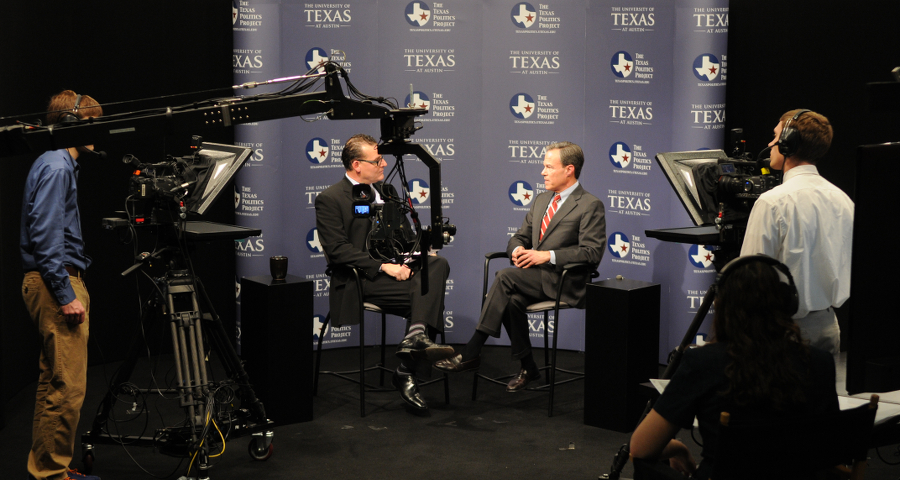
Guest Panelists Paul Burka, Eileen Smith, and Jim Warren discussed "Legislative Blogrolling" for the Texas Politics Speaker Series on April 11, 2007.

Dr. James Henson: All right. I'm glad to welcome here three fixtures of various sorts on the Texas political scene right now, and I'll introduce them in order. To my immediate left, Jim Warren is a graduate of this university, an illustrious graduate of the Government Department, in fact, so we're happy to welcome him back to the College of Liberal Arts.

He has worked for a wide range of people in Texas politics, including Jack Raines, Bill Clements, Pete Laney -- he's been a guest here before -- Bob Bullock, Buster Brown, and I think I cut him off; he was still naming names, so I suspect there's more, but has been a part of the Lobby with a capital L since 1991.

After a false start that "sucked" during the 2005 legislative session, he started Billy Clyde's Political Hot-tub Party this past September, and that's a blog, not a regular activity. It was anonymous, more or less, and maybe he'll explain, you know, why that was and why that didn't last very long.

Next to Jim is Paul Burka. We could say a lot about Paul; Paul joined the staff of Texas Monthly one year after the magazine's founding. He is the holder of a JD from the law school of this university and is a member of the State Bar of Texas. He spent five years as an attorney with the Texas Legislature, where he served as counsel to the Senate Natural Resources Committee.

He started blogging at Texas Monthly's Burka Blog, or is that Burka's Texas Monthly Blog? I kept playing with that; I couldn't figure out exactly how I wanted to do that.

Mr. Burka: I hate the name.

Dr. James Henson: He --

Mr. Burka: Pick something new.

Dr. James Henson: Well, he started -- well, maybe we'll do that before we're done today. Maybe that'll be the first question: what should Paul Burka's blog be called?

He started blogging at this site, more or less, 16 months after describing himself in print as quote stuck on the old foggy's side of the other, of the media civil war between the MSM, which I appreciated as an abbreviation and the bloggers, defending the idea that our expertise and credibility do make a difference, and that our filters are now necessary to protect them. And so we'll also ask Paul why he started blogging.

And then next to Paul is Eileen Smith, who functions under the pseudonym, thin pseudonym, Pink Lady, and is editor in chief of In the Pink Texas, and has a master's degree in journalism from Northwestern University.

Ms. Smith: So sad.

Dr. James Henson: That was a sage nod; I like that. At one point, she worked as a staffer for Rob Janell in the Texas House. She started In the Pink Texas in January, 2005 for reasons that maybe she'll explain to us, if she's explained them to herself fully, which I'm not sure is the case.

So thanks all of you for coming. I guess the -- you know, what I sort of implied in all that is I'm kind of curious for everybody here what made each of you start, since you all sort of started from such very different places.

What made you start blogging, Jim?

Mr. Warren: It was a total lark. It was actually over the Christmas vacation last year and a fairly high-ranking state staffer called me and said, have you read Burka Blog, and I wasn't paying much attention. I said something along the lines of no, I haven't been to Book Stop in a couple of weeks, thinking it was some new novel out or something. Oh, Burka, I didn't know he had a blog.

So I went on it and I started reading all this and the speaker's race was really the hot deal, and it was so hyper-serious on both sides, the left and the right and pro and the con, and these have always been kind of low-key, internal, affairs and it intrigued me, so I kind of launched this deal for two reasons: one, to see if I could launch a blog, because I'm not very computer-savvy, and two, because I wanted to kind of put kind of a humor element on it, because I thought we needed to tone it down, rachet down a little bit.

And, for some reason, people found it and read it and I thought it would last about two weeks, and six months later, I'm still doing it and I still don't really know why.

Dr. James Henson: That's a lifetime in the blog world, really.

How about you, Paul? Very different reasons for you. Right?

Mr. Burka: Oh, yes. It wasn't -- it was not an option. It was Evan Smith, our editor, called me in and said, it's time to change your job description, and that's never a good beginning to a conversation. So I said, you know, generally the thing to do in those situations is just to let them talk themselves out. Don't ask -- you know, there's a rule, don't ask a question to which you do not already know the answer, so I didn't ask anything, and he said, I want you to start blogging.

And so, as I said, it wasn't a choice, and it was not a choice I would have made, but it seemed to me at the time to be a demotion, and I was executive editor of the magazine. I thought, well, you know, this year a blog or next year, a tin cup.

And so I said I would do it and Evan's initial idea was, he said, I want you to blog six times a day. My next thought was suicide. I just thought, and remember this was July, I mean, like when nothing was going on. So, but it had to be done and so, I think the hardest part was -- the technology was not that difficult to learn, I was surprised to find out, because if it had been difficult, I would have probably not been able to do it.

But what I did -- the hard part, I think for me, was finding the right voice that, at some point, I could read my own work and thought, this just reads like it's in the magazine, and that's no good, so I started, you know, more first person, more -- a little more opinionated, and eventually came with the idea that the way to cover the legislature is the way that ESPN does Sports Center. You know, you just -- who's winning, who's losing, who fumbled, who's done great. What are the top ten plays? I mean, I don't specifically do that, but that's how I think you have to do it.

Because it is a sport; it's great sport, and the teams change all the time and you don't know who's -- what the uniform numbers are. So it was a slow start because July was a slow time, but then as things went on, there were a couple of Tom Delay law cases, I got to go to New Orleans to watch a case in the Fifth Circuit. I got to break that story of -- I knew how the case was going to come out -- from having heard the questions, and gradually, once we got into the election and the speaker's race, to which I owe a great debt to you, because --

Dr. James Henson: Hey! How much would that be?

Mr. Burka: The payment you got is I didn't put your name in there, but I had -- there was always talk about, there's going to be this person running and that person running and I fell for a lot of that stuff. And finally, I just wrote an item that said, I am tired of hearing about the speaker's race; I'm not writing another word about the speaker's race until some one of these steps forward and says, I'm it. And about five minutes later, I got an email that said the wannabe is Brian McCall and he filed his papers to run on Friday. Jim Warren.

And so, the game was on, and I was able, I guess, to break that story that the papers have been filed, and it's one of the things about the blog is, you don't -- you never can be quite sure that you've broken the story and in the second place, if you do break the story, nobody gives you any credit for it. The newspaper that finds it two days later will get the credit.

But anyway, I said Brian McCall. I called Brian and I said, Brian, I got this email. It says you filed your papers Friday to run and I said, I'm not going to publish it if it's inaccurate, because normally I publish all letters I get, but I'm not going to publish this if it's inaccurate. So if you tell me it's inaccurate, I won't publish it.

Long pause -- I knew I had him. And so he said, I did publish it, but I wish you would hold off for a couple of days. It was the Friday before Christmas; he wanted that long weekend, and I said, can't do it, Brian. I said, the minute you make two phone calls, the whole state's going to know. So I like Brian; he's a friend. I would much rather have him be speaker than Tom Craddick, but this business is business, so I published that, and thanks to you for sending it. So, from then on it was kind of smooth sailing.

Dr. James Henson: And you, Pink Lady?

Ms. Smith: Well, I'm the oldest blogger at this table.

Dr. James Henson: You're the senior blogger.

Ms. Smith: I am the -- yeah. So I started it in 2005 and I was 32 when I started the blog and now I'm going on 35 and I don't know whether that's a good thing or a really, really sad thing for me. But basically, when I started it, it was just a platform for me to write; it was just kind of a creative outlet, and if anyone read it or was interested in it, you know, that was great.

Then I, you know, there just started to come more and more interest, and I think in 2005 is really when the political blogs exploded around Texas. So it was good timing on my part, but yes, you know, In the Pink had built a community around itself, and that's what I really liked is the interacting with readers, and Mr. Warren over there used to be one of my best commenters, and then he started his own blog. I used to learn a lot from what you said, including when you said, there is no speaker's race, but --

Mr. Warren: That was kind of a jab, but I believed it to be true and it got a little out of hand; it got a little farther than I thought, but I --

Dr. James Henson: You told her there was no speaker's race --

Ms. Smith: Right.

Dr. James Henson: -- and you told me there was one.

Mr. Warren: No, I said that -- there's a difference between being a candidate in a race, but --

Ms. Smith: Anyway, and I also got more people that were interested in it to write for it and one of my most -- best writers is T.J. Shroat; he's over there. I was going to make him sit on this panel, but Jim told me I had to.

So, the speaker's race, actually, you kept saying there was no speaker's race, and I had this -- I was kind of optimistic, thinking that, you know, there would be an actual race, and I was at a press conference that you were at. And it was kind of a press conference non-conference, when Representative Pitts and McCall stood up there and said, we have the votes for speaker, you know, it's done.

But they wouldn't release any names, and when Pitts was speaking, it was like -- and I have great respect for Pitts -- but it was like, you know, down home, country bumpkin kind of talk. And McCall was just this polished, you know, very outstanding-like speaker and I just thought, why did they decide. Why is it Pitts and not McCall running, but I'm sure there were politics around that.

Mr. Burka: Well, you haven't figured that out yet?

Ms. Smith: No.

Mr. Burka: The main qualification to be speaker is the inability to speak the English language. If you've never been around Billy Clayton or Gib Lewis or Pete Laney or Tom Craddick, you know, yes --

Ms. Smith: There's my answer.

Mr. Burka: -- good speakers do not make good speakers.

Dr. James Henson: You know, the speaker's race seems to have been kind of critical for all you guys. Right? I mean, in different ways; I mean, it seems like it kind of got you going and it seemed like your blog, Paul, kind of really, I mean -- the buzz really kind of took off, it seems to me on your blog. I mean, people were reading it, but then all of a sudden, you know, somebody mentioned you on the floor during the debate.

Mr. Burka: Yes, I was in the gallery and I felt like I was having a naked dream, like everybody turns around and looks at you, you know. My eyes -- so it was -- but I think it was something that changed so often every day. You could post three or four times every day, and one of the liberating things about being a blogger is that you don't have to be right all the time, you know. You can say something and then somebody, no, no, no, now somebody else told me that's not right, and here's the -- you have to be right some of the time, but not all the time, and so it was trying, again, to cover the race in mid, you know, as sort of midway through as it was happening.

Dr. James Henson: The freedom to be wrong.

Mr. Burka: Yes. You know, if you can pull them down and change it and it goes away and no one ever knows it was there, so it's --

Dr. James Henson: If you've got something else, but since we're on the speaker's race, you know, Eileen, talk about your effort to live blog the vote.

Ms. Smith: Oh, yeah. Well I thought for some reason, some crazy reason, that I'd be able to just get on the House floor -- not on the House floor, but in the Chamber, and you know, you couldn't get in. People had been waiting and getting tickets because everyone expected this big brawl on the floor, so instead, I, you know, snuck into this, you know, little extension, one of the hearing rooms and watched it on the t.v. and then my battery went dead and I didn't have my extension cord, so then I went back to my office and was trying to pull it up online, but everyone else was pulling it up online.

Finally, I got online and I -- but the readers in between those times were like, where are you? Why aren't you talking about the speaker's race? Like I had just abandoned everything.

Mr. Warren: Well, that was the general impression, yes.

Ms. Smith: Well, thank you, Jim.

Mr. Burka: That happened to me. It was -- the speaker's race was Tuesday and so, you know, the weekend before, there was a lot of activity. Well, there was a huge bridge tournament -- she made fun of me because I'm a bridge player. So, and like I wrote, I said, okay, you know, y'all -- in fact, I went to a bridge tournament, spent all day playing cards in a big bridge tournament. And I came back and I had all these emails. Where have you been? What are you doing? Why aren't B- you know, have you stopped, or you've gotten, are you -- it was like, you don't have a life, you know. They owe you, and it was actually --

Dr. James Henson: That was actually the next thing I wanted to ask you about. I mean, all of you have got interesting -- you always talked about how you loved your community.

Ms. Smith: Well, the big difference between the -- well, one of the big differences is that, you know, Paul's readers are holding him accountable, but he gets paid, you know. I mean, when readers are like, I can't believe she's taking another 3-day weekend. I'm like, I'm not getting paid to do this; it's a hobby, you know. So, I don't need -- you know, I don't have to be accountable.

Dr. James Henson: And you posted in a really amusing way about telling people to leave -- basically leave you alone about posting.

Mr. Warren: Well, you know, it's difficult enough to like, to go from E2 to the third floor or fourth floor proper, because people want to grab you and talk to you about this and that, and it's almost kind of like getting mugged, trying to get from the far end of the Capitol to the other end.

But I'd get people stopping me, not saying have you seen my amendment, or have you seen the Committee substitute or do you have a witness that's going to show up at this Committee? It was, damn it, Jim, you hadn't posted anything in three or four days. What's wrong? Post something. So I was like, well, I come up here at 7:00 a.m. in the morning and I leave at 10:30 or 11:00 p.m. at night.

It's kind of -- I don't get paid either, Eileen. And I suggested to my fans if they were that interested in mindless entertainment, get a pet monkey.

Dr. James Henson: You think it would be about the same?

Mr. Warren: No, I think the pet monkey would probably be more interesting.

Dr. James Henson: Would post more, anyway.

Mr. Warren: And probably is a better typist.

Dr. James Henson: The pressure to be fresh I think really -- I mean I think that's why, you know, at six months, you know, you're a veteran already. I mean, it's hard to keep it going. It's really hard.

You know, I want to ask kind of, you know, one more thing that is a little more applicable to you guys than to Jim, although you probably have a view of this, is, you know, you guys both, obviously in different ways, come from journalism. How was that transition in terms of, you know, being the blogger and being the journalist?

Ms. Smith: Are they the same, Paul?

Mr. Burka: Well, I mean, they're different. In fact, I would sometimes have, you know, even in the staff meetings, you know, like everyone around the room once and said, okay everybody, tell what you're writing next. Got to me and I said, well, I used to be a writer, but, you know, now I'm a blogger.

And I sort of feel that way; I mean, I feel like slumming, but, you know, slumming is fun, and you know, you can write in first person when you feel like it. You can say, I don't get it when you feel like it. And I think it's liberating, but the other thing I try to do about the blog is I try to report. And so, it's, you know, I'm a journalist in the sense of being a reporter. I spent, you know, I'm in the process of interviewing every senator right now.

Patty Hart is my colleague, and, you know, we spent an hour and a half with Senator Corona yesterday about transportation, and we're going to make the rounds of the senators, and I spent lunch with Justin Keener from the speaker's office here and a member and another staff were talking about how the fruit case got settled.

And so, you know, that much -- to that extent, I guess I'm still a journalist, or maybe just nosy and, you know, I've always wanted to know what's going on, and that's the main thing. I think there are -- whether you call it journalism or blogging or whatever, I think there are two qualities you have to have. One is you have to be curious as hell and really want to know what's going on, and then you really want to have to tell what you know. You have to have that inside of you, something that you want to get out.

And so, for me, I don't -- I write at weird hours. I write -- I posted this morning at 6 something -- 5 something and 6 something, you know, got up, went in, had things to say.

So, I think of myself still as sort of barely, barely in the journalism camp, because I don't -- because I think reporting is what matters. You have to have the combination of reporting and attitude and, you know, inside information and that sort of stuff.

Dr. James Henson: And from the source?

Ms. Smith: Well, I'm a dancing monkey in the slums. I don't think I got my master's in journalism thinking that I'd end up, you know, being a blogger. But it's -- you know what? When I did it, it was kind of like, I just wanted to be funny. I wanted it be -- you know, I wanted to show the personalities of the legislators and not just, okay, here's a news story, here's a news story, here's a news story.

And when Paul mentioned reporting, I mean most blogs except Paul's don't do original reporting. They just kind of suck off of mainstream media and then write their opinions.

But I think, you know, as more bloggers become almost virtual columnists, it's the way news is moving. It's almost like there is no breaking news anymore, because there's this 24-7 news cycle.

But I did -- I saw one of my colleagues from Northwestern and I hadn't seen her in a while, but I was watching Meet the Press on Sunday a few weeks ago, and there she was, and she's with The New York Times and she's on Meet the Press and I'm like, I'm in Texas and I'm a blogger.

So, but you know, more and more I think traditional journalism, I mean, every major daily and now Texas Monthly, they have blogs, you know, because people kind of want that insider information.

Mr. Burka: But they don't know how to do it, you know.

Ms. Smith: They're learning.

Mr. Burka: They're learning, but they're so -- they don't -- they're still sort of constrained by the newspaper format, you know, that's what -- if they learn, I mean it's going to be really competitive, but I don't --

Mr. Warren: I can tell you where they're good, Paul, is sports. Sports bloggers, the morning news, the Chronicle, the big papers, they're good at it. They've figured it out, because politics is lagging a little bit behind it.

Ms. Smith: Paul, they're -- I mean they have a job as reporters and then they're supposed to be semi-cute, semi-funny in this blog. And if they say something about a legislator, they're going to see that legislator the next day on the floor and here, she probably won't talk to you.

Mr. Warren: They're going to see that shortstop in the clubhouse the next day, too.

Mr. Burka: Bruce Gibson told me when I started blogging, he said, you're going to ruin your credibility. First of all, I was grateful that he thought I had some. That was a step in the right direction, but you do B- you do have to write things about people that you're going to see the next day, whereas at Texas Monthly, if the legislature's not in session and I write something about Rick Perry, I may not see him for, you know, weeks, months if I'm lucky.

Dr. James Henson: He'll be mad at someone else by then.

Mr. Burka: That's right.

Dr. James Henson: Well, I mean it seems hard for me to imagine though, the kind of things that -- I mean, there does -- whether it's journalist or blogger doesn't really make any sense to me anymore, but it is certainly really hard for me to imagine anybody writing for the Dallas Morning News or even Texas Monthly and doing the kind of, you know, R-rated stuff that you two do in your blogs. Right? I mean, I just can't really imagine --

Mr. Warren: I'm kind of more, what is it? PG-13.

Dr. James Henson: I want to know what movies you're watching these days.

Mr. Warren: I have a couple of rules and I've violated my own rules a couple of times, but I don't try to do anything that's personally -- that I think that someone would be personally offended by, and I have violated my own rule once or twice, and I wish I -- once you hit that Send button, you can't get the damn thing back, you know.

But I try not to use, like Eileen language, which is really bad.

Ms. Smith: That's only when T.J. writes.

Mr. Warren:Oh, that's --

Ms. Smith: I'm just the editor.

Mr. Warren: And, you know, I don't want anything to be malicious or anything. I try to be kind of goofy, illustrative, make a point, hopefully make it funny, but, you know, I don't want anyone to be mad about the deal.

Dr. James Henson: Right. I wasn't even thinking so much about mad. It's just, you know, sometimes the tone of the humor is, you know, R-rated. We'll leave it at that.

Mr. Warren: When Harry Met Sally, the take-off on the Florence Shapiro, and who?

Ms. Smith: Dewhurst.

Mr. Warren: Dewhurst. That was a classic.

Dr. James Henson: All right. Well, that points us in the direction of what's going on right now, so what's fun at the legislature right now? Y'all have been writing about it. What have you enjoyed the most in terms of fodder?

Mr. Warren: I think that -- and this probably isn't really under the category of fodder -- but I think that for the first time in I guess the last six years plus, I've been amazed that the legislature has ceded traditional legislative authority to the Executive Branch, kind of without thinking about it. And that's a healthy tug that needs to go on there and I think a lot of it has to do with there were so many freshmen Republicans that got elected six years ago, that they didn't really understand that that's supposed to be a natural give and take there.

And now they're third termers and a lot of them are chairmen and they're saying, you know, what did we do? Let's get some of this back or at least re-balance the deal.

Mr. Burka: Well, in that year, there was like a Republican monolith pretty much, although Dewhurst and Craddick were fighting. But I mean the Republicans controlled everything; they made every decision. It was their agenda they were enacting, not the sort of -- not the long-term public agenda of the State but the pent-up agenda that Republicans had had and were able to enact.

And so you really -- they didn't see any difference between the governor and the --

Mr. Warren: That's exactly right.

Mr. Burka: -- and the House. And so they invited the governor into budget negotiations and I was appalled too. I wrote about that. I wasn't blogging then, but I was just appalled at it. And, you know, finally -- that's to me the great story of the session is that the legislature has discovered it's an independent branch of government and challenged Perry and --

Ms. Smith: I think it was a political castration. Can I say that?

Mr. Warren: Yes.

Dr. James Henson: Please do.

Ms. Smith: Well, I mean, two executive orders both slammed down by the legislature, so -- I mean I thought that was -- they were definitely sending Perry a message.

Mr. Burka: Well, you know, your kind of explanation for that kind of makes sense to me, that you have a bunch of new people that don't go in and, at that point, party loyalty, loyalty to other political allies is sort of developed and there's no institutional sense or institutional loyalty, and that really only develops after being in the institution for a while. Right? I think.

Mr. Warren: Well, you know, when I worked for Governor Clements, he asked the legislature for something called budget execution authority, which is law now, and they put all kind of restrictions on it and said, LBB had to approve it and everything, and that was considered a huge granting of executive authority, just by doing that, even though there was major legislative oversight.

Now, they're just giving the governor $300 million and saying, this is your Enterprise Fund, do what you want. And executive orders don't mean anything. I mean time of disasters or lowering the flag when someone important dies, but it's not appropriating money. Anyone who thinks this HPV deal, the --

Ms. Smith: Gardasil?

Mr. Warren: Yes. Anyone who thinks that's a public health debate is wrong. That's a separation of powers debate, and if it was a public health debate, Jessica Farrar's a great legislator; Dennis Bonnen is, but -- you know, he's a great insurance agent; she's a great architect. Those aren't the people you want debating your major public health issues. It's a separation of powers debate, pure and simple.

Mr. Burka: I think that was the hardest thing I've had to write was trying to explain where I thought Perry was coming from on this, and I wrote that I thought he was power-hungry, and you can see, if you just look at the Executive Branch, the Insurance Commissioner, a former Rick Perry staffer, the PUC Commissioner, a former Rick Perry staffer; you just look all through state government and he has -- all of the people he's appointed are his staffers, former staffers; they're all out there, so that he can run those agencies, and basically by-pass the legislative oversight, tell them what to do.

And I really, I wanted to get into psychobabble on it; I really did, and just -- because my -- I'll give it to you-all. My theory is that Perry is somebody who has no respect from the populace at large and never has had any and so, his answer is to try to sort of compensate for it by amassing more power.

And, you know, by God, I'm the guy and so it was hard to write. I'm not sure I did a very good job of it, because I knew there was a line I shouldn't cross, but I never found it.

Mr. Warren: Ann Richards actually started that, by wanting to have executive directors and name the chairmen and Sunset gave her that slowly and I think the job of the government, of the governor, head of the Executive Branch, if you're going to get blamed for everything, you ought to have a little control over government. I don't blame him for that, but I guess the thing that disappointed me is the Legislature didn't fight back for six years, you know.

Both sides ought to try to take power away from each other; that's healthy, and the Judicial Branch, too. And it was a one-way street. Perry got his way for six years and now he's surprised that there's a backlash. Well, duh.

Dr. James Henson: What have you written the most about?

Ms. Smith: I did write a lot about HPV, just because, you know, on one hand, it was like, oh this is, you know, this is a good idea. How can it not be a good idea, you know, preventing cervical cancer? And then you go to the politics of it and Mike Toomey is the main lobbyist and I think it was -- I forget who was -- oh, Gardasil, which is the vaccine they were going to use; it's from Merck, and GlaxoSmithKline had the exact same vaccine in the pipeline and Toomey was representing Merck, and it just seemed like, you know, I mean, it's power again, what Paul was talking about.

But I think what I probably wrote the most about was some of Leo Berman's fine immigration legislation. He basically wants to deport all Hispanics.

Mr. Burka: Yes, it seems like there's a good -- I mean, early in the session, before things start to die off, there's always a lot to write about, you know, who knows what's going to make it in lobby.

Mr. Warren: You know, that's an interesting issue about the immigration deal, and I think one of the things that hadn't been covered by the MSM, as they say, is there's a big division in the conservative community between kind of this social conservatives -- that's not really the right word, but -- and the business conservatives. Because if you want to run the housing and overall construction and the restaurants and a lot of the small business and, I mean, I don't see these guys who are the Leo Bermans of the world, who want to clean their own gutters and replace their own roofs, or even out mowing their yards in Tyler on Sunday afternoons.

These people provide a very valuable service and at a cheap cost. But there's, for some reason, the Dan Patricks of the world have this idea that this is going to ruin our society for some reason. Even though the Comptroller's office has said it's a 17 point something billion dollar benefit to the Texas economy, they're convinced that somehow we're breaking their local hospital authorities or something, which is demonstrably not true.

And I don't get it; I really don't.

Ms. Smith: Well, it's like the Farmers Branch ordinance. I mean, it was like it just came out of nowhere and it's -- I think it's just fear based.

Mr. Burka: I wrote a column about it in the old mode, in the magazine, and that was -- and that's how I started it was, I don't get it. I thought we decided on this back in, when we had an immigration bill under Reagan, we had amnesty. We decided what we were going to do, and -- but this is a really strange issue, because in politics, there are almost all issues come from either just the bureaucracy. If you go to the LBJ school, when you study policy development what they'll tell you is, most of the issues come from indicators, these little bureaucrats in green eyeshades studying, you know, what the climate is, or you know, or what the income level is and then they see these problems and then they try to address them.

And almost -- or they come from an election when someone -- either the government changes hands or someone has run on a platform -- they almost never start from the grass roots and bubble up. I mean, that just doesn't happen. It's -- and immigration did that. The politicians would never, ever have gotten on this issue. They had no choice. And they -- because they had people like Leo who are just nutty on the subject.

I haven't looked this up, but I was at dinner the other night and some Republicans were talking about this, and apparently Linda Harper Brown has a bill that, if there's a traffic stop and you find there's an illegal alien in the car and she's pregnant, she must be deported immediately, so that she can't give birth on American soil and have a citizen.

Ms. Smith: I think they're sending illegal babies over in, like, Moses' basket back to Mexico.

Mr. Burka: And then there was -- if they are not sure whether they're pregnant or not, they can give them a pregnancy test, which gives a whole new definition to the words, spread 'em. It's like --

Ms. Smith: Now see, that's bad language that he uses.

Dr. James Henson: But it's not on the blog. It's only from Paul Burka live.

Mr. Burka: But this is just crazy stuff.

Ms. Smith: Stand up.

Dr. James Henson: That's excellent. Okay, well, I think we've touched on this. I want to open it up for questions, but so, give you a chance. Who's like giving you the best stories in the legislature so far, both -- who do you rate highly both in terms of seriously doing good work and maybe only semi-seriously giving you things to write about?

Mr. Warren: You know, my opinion, the -- there's always a group of work horses and show horses, and then there's, as his magazine calls them, furniture, which I don't think there's anything wrong with furniture. There's a place for that --

Mr. Burka: If you know you're furniture and act like it.

Mr. Warren: -- and maybe there's just one little bitty deal that you're good at in one committee and you're kind of the rent-to-own guy or whatever, you know. That's fine.

Mr. Burka: -- but if you're noisy furniture, that's bad.

Mr. Warren: Yes, that's bad. But if, you know, it's the people that you would expect. It's the folks who know how to get together majorities or super-majorities. The Senate's real interesting because the Senate has basically become, in my opinion, almost operating on a unanimous consent basis, just because they have to. There's no way they can deal with all that. The Senate had their most productive day, floor day, as far as non-uncontested calendar days, today, and they passed 14 or 15 bills. And, you know, it's April, whatever today is, April 11th or 12th --

Mr. Burka: It was through yesterday, wasn't it?

Mr. Warren: Yes, it was through yesterday, so you know, hell, get on a roll, it might be 20 before the week's over. But they just -- they're -- they have so much to do and there's a lot of talent in the Senate, but it's a lot of talent that it's not like, you know, a Farabee or a Monford or Icaris of these guys that have been up here for 25 years and know -- it's Brimer and Averitt and Duncan and Ogden. There are even a lot of new senators, you know. I looked around today. I just happened to be going through the gallery. I saw Kirk Watson and Glen Hegar debating something -- not debating, like disagreeing, but two very bright guys. They're going to be stars of the Senate if they hang around, but they're not those old bulls like when I first came up here and Burka came up here when I was in Kindergarten, so you know --

Mr. Burka: I worked for Babe Schwartz.

Mr. Warren: Yes, I know.

Mr. Burka: That was my -- probably not a person you ever heard of.

Mr. Warren: I worked for the guy who beat Babe Schwartz.

Dr. James Henson: So what do you think, Paul?

Mr. Burka: Well, they are people who -- if Eileen weren't here I would say this with more confidence, but she's going to write about how crazy I am and maybe she's right, but I think Chisum, Warren Chisum has been remarkable in this weird way. I mean, I'm telling Evan, you know, Evan's wife is on the board of Planned Parenthood. Evan is, you know, comes from New York. He's pretty liberal but he understands the other side, too. Evan is an incredible editor.

But, you know, the words -- Warren Chisum will send him into a foaming, you know, rage. So I -- Chisum is chairman of House Appropriations, so he wants to know -- give me a preliminary best list, and so, said, well I've got some names. There aren't that many. This is the House, you know. I'm not overloaded with bests.

So, but you know, I give him a couple of names. Then I said, then there's Chisum. I said, I think he's been a really, really good chairman of Appropriations, and he just has a great sense of the tides of the House. He's a veteran; he knows what the kinds of people you're talking about, and they're not bulls in the House, but they're sort of senior guys who sort of know when it's time to do something, when it's not time to do something. They respect the institution.

And I told him a couple of stories. So I'm getting ready to leave the house the next morning and he calls me up and he says, do you know what your Warren Chisum has done? And so, you know, he's introduced a bill for mandatory Bible classes in Texas, and the abortion trigger bill. And so, you know, don't give him to me on the best list. So, you know, what am I going to do?

So, later that day, I'm at the Capitol and it's getting pretty late; it's about 9:30 p.m. and I run into Scott Hochberg, who's on the Education Committee and they've just heard the Bible bill debate. Scott talks about it a little while and I said, what am I going to do with Chisum, you know? And he said, well, let me tell you about Chisum. Yeah, he's got these crazy bills, but he said, during the Appropriations debate, right after the Democrats tacked an amendment on for a pay raise, taking the money out of the Republican idea of merit pay raise and into the more education community popular across-the-board pay raises.

He said, I had the next two amendments and he said, I was scared to walk up there. And he said, I got up to the front and he said to Warren, I've got the next two amendments and if you want me to take them down, I will. And he said, no, no, no; I'll just accept them. No problem. So that was the first surprise.

And then the next thing was, he said -- Scott said, who's a great legislator, Scott said to Chisum, if you -- he said, I see you all are out working the floor, trying to reverse that vote, trying to reconsider the vote on the pay raise. He said, I hope you don't do it, because it will really blow things up. And Warren said, he said, yeah, he said, they're trying to reconsider it. They just don't know that they're not going to do it yet.

And that's what makes a great legislator, right there, you know. He knew what had to be done -- you see, I am nuts, aren't I? I know you're thinking that. Right? So, anyway --

Dr. James Henson: We'll be able to see that facial expression on the video later.

Mr. Burka: Yes. So to me, I think Chisum's the biggest surprise to me, because it's -- you know, you can be a good Appropriations chairman just by keeping a lot of people happy, but the meeting I had at lunch with Justin and his friends -- or the people he got together -- Justin told me that Chisum, a couple of weeks out, called the exact dollar amount the plaintiffs would settle for, to the -- almost to the dollar, he said.

You know, you've got to be -- the guy has never been to college, and yet he has that -- he has the ability that's unique to the House of Representatives, so --

Dr. James Henson: But we do support going to college.

Mr. Burka: Yes, we do.

Dr. James Henson: Eileen?

Ms. Smith: I think the anti-immigration stuff was fun to follow. I mean, fun in a way that it was, like kooky. When you talked about the abortion trigger bill, so that was one of Senator Dan Patrick's -- that was one of his big things in his campaign, and I don't even know where Dan Patrick's from, so I always just put in parentheses or Crazy Town. But he has, you know, he has been interesting to watch because he's just ineffective. I mean, all he is is a show horse, like you were saying.

But you didn't say he was a show horse, but there are show horses.

Mr. Warren: I've been trying to get you right about him for a year ago. Remember, I used to lobby you? I said, write about Dan Patrick. Write --

Ms. Smith: Did you?

Mr. Warren: Hell, I actually sent him an email saying, can I do something in Texas Monthly about Dan Patrick.

Ms. Smith: I just wrote about him walking off the floor when the Muslim cleric was saying the prayer.

Dr. James Henson: He's given up on you.

Mr. Burka: That -- you know, we -- I did pass that on and that was part of the genesis of many stories, which was a good story.

Mr. Warren: It was.

Ms. Smith: You know, my big disappointment was when there were all those rumors that I think I was the only one who believed, that Rick Perry could be considered for the VP spot, and I just thought, god, that would be so awesome, I mean just to, you know, I mean just to imagine that someone else from the governor's mansion would be on, you know, a national ticket.

And then when Mitt Romney announced, I thought that would be great, because they look exactly alike, and I just imagined them like, standing together at, you know, conferences and stuff. But it was never to be.

Mr. Burka: You know what would happen?

Ms. Smith: No.

Mr. Burka: You know how lucky Perry is. Mitt Romney would go out on the Inauguration Day; he would forget his hat like William Henry Harrison. He'd be dead in a month and Rick Perry would be president of the United States.

Dr. James Henson: On that note, I think we're going to open it up to questions, so if you'll let Shawn come around. If you have a question, raise your hand and give Shawn a minute to come, please. Have at it.

While we're waiting for the mic, thanks very much. That was enormously fun.

Man 1: One of the big questions or problems with blogging in general and indeed, in a way, with the internet as a whole, is the question of filters or verification or vetting of information.

And some people seem to think that the old John Stuart Mill marketplace of ideas will take care of that, somehow, but we see all sorts of instances of real damage being done by people taking blogs seriously and linking to things before anybody's really checked on things and I wonder what each of you thinks about that -- the scale of that problem and whether you have any good ideas about how to try to deal with it.

Mr. Warren: Well, I've frequently said that my side is what we call the no research zone, and I think the last thing I wrote, I wrote something very authoritatively and then said in parentheses, and I know this because I can remember someone told me this a long time ago and I vaguely remember it.

So that's kind of the way I vet my stuff, so if you, you know, if you're writing your master's thesis, don't use me as a primary source.

Dr. James Henson: Paul?

Mr. Burka: Well, you know, I have to say that a lot of the time I spend, you know, if I'm going to quote somebody, I look it up on the legislative archives. I mean, I want to try to get that right. Now, when I'm -- if I live -- like I was, I live blogged as they say, the Appropriations bill, all the key amendments and wrote about them. And I didn't try to go back and check all those quotes but I did write them down and try to get everything as it went through.

So I do think it's important to get stuff right, but there's also been, in terms of the self-correcting idea of the blog, one of the things I did that we got -- we were sent a letter at Texas Monthly that the SMU faculty at the Perkins School of Theology was circulating against the Bush Library, and so I got that letter and I broke the story nationwide. Again, not that anybody else but you-all know it, because there's no credit for it.

But -- and then there were -- we got -- it was put up on huffingtonpost.com. That story was taken there. Tons of comments there and on Texas Monthly, many allegations about Bush's executive order and limiting access to the presidency and what it -- presidential papers and what it did.

Well, about halfway through the first day, I got an extremely long and lucid letter from an archivist that laid out exactly what the rules were, what the problems were with Bush's order, the things that weren't the problems. It was amazing. It was amazing. It was so good that I not only published it, but I took it out of there and did an independent post on it, so the readers would be sure to see it, because I don't know how many people actually read the comments.

But that, to me, was a good example and then the other one that was really weird was, that when I was writing about Perry, who was clearly going to be a minority governor. He was going to be plurality governor, not a majority governor. So I looked up to see who the governor was who was the closest and it was Elijah Pease, and so I wrote a little piece about Elijah Pease and what he had been like and I took it from the Handbook of Texas and I said, this is what the Handbook of Texas had to say about Elijah Pease, and ten minutes later, there is a posting from the guy who wrote the article in the Handbook of Texas. What does he do all day? Go out and Google Elijah Pease? I couldn't believe it.

So, anyway, it is an amazing medium, and the people that you -- you never know who you're reaching out there and I do think that people -- just like when I said, I'm not writing about the speaker's race anymore until there's a candidate and within ten minutes, Jim had sent that message that there is a candidate.

Dr. James Henson: Do you think the blog really helped, sort of moved you along in thinking about that? Because I mean I sort of quoted your -- you know, that you've kind of quoted, you know, your sort of article in Texas Monthly saying --

Mr. Burka: Which Evan?

Dr. James Henson: -- Right. Evan, yes, I know --

Mr. Burka: You do?

Dr. James Henson: -- in March of 2005. Yes, anyway in March of 2005, you know, Paul kind of wrote a column saying, you know, after the Dan Rather thing, being very skeptical about blogs and defending, in a sense, you know, the filters that are in mainstream media practice. So do you think that actually doing the blog added -- not made you change your mind, but added more depth to the way you think about this?

Mr. Burka: Well, yes. I think just those experiences that the people who are reading them and comment, and there have been others where experts write in and really know. They really know things.

I've gotten a letter from a lobbyist who had a child in TYC and wrote about what it was really like, as a parent dealing with TYC, and that was really incredible to have that.

So I am amazed and incredibly respectful of how the blog transmits information. On the other hand, there is obviously a lot of garbage that comes out, but you know, if you read the blogs about Texas politics, which I -- I don't read them all every day, but I try to keep up with them -- there are some that -- there are none that I read that are just plain -- things are just plain wrong.

And they all shed a lot of light on them. You can find a lot just by going down the list of those items. I mean, even -- you know, Burnt Orange Report -- anybody here from Burnt Orange Report? You know, those are young guys and women, but they're good.

Dr. James Henson: It's kind of second generation, too in the second generation.

Mr. Burka: Yes. They have -- they break some stories, so I just -- I think it's pretty good. I still think there is no substitute, if you're going to cover it the way I want to cover it, for reporting. You've got to report. I mean, I'm in the middle of a story now about a fight with Dewhurst, who called me yesterday. I had said there was going to be a -- that there's a rebellion against Dewhurst on the --

Mr. Warren: I heard that this morning, they're trying to round up 11.

Mr. Burka: Yes, yes. And on the Appropriations bill and I had it a week ago. I wrote something about a week ago, after talking to some Republican senators. There's one Republican senator that I didn't used to like him and he didn't used to like me, but he decided he had to have somebody to talk to, to get this stuff out.

And now, we are best friends, and so, but, you know -- so I said -- I wrote about this, you know, Dewhurst is in trouble. He's got all these problems and the budget bill may not get out because of how he's handling things, and who he's put on the -- probably who he's putting on the Conference Committee, so I got a call from Dewhurst yesterday, you know, to -- will you hold, please for the Lieutenant Governor? And so, Dewhurst says, the bill has just gotten out of the Committee.

See, he's so chicken. He didn't call me before and say, you're wrong. He waited until he got the bill out on a 15-nothing vote, and he called me and he said, well, I sure want to thank you, Paul. He said, you know, you wrote how the bill was in trouble and all of a sudden, he said, senators were coming in to me and promising their vote, and now I got it out, 15-nothing. He said, I just want to thank you. And I said, Governor, I am happy to serve. Call on me anytime you need more votes. I'll do whatever I can to help you.

And -- of course, we're all just, gritted teeth, you know, but this is how we're doing. So today, I got up and the first thing I posted was, don't be fooled. Yes, the bill's out of Committee, but those -- that is not a settled issue. Those senators are still working. They think they can get 11 votes to beat the bill, and I said, this is not rumored; I don't print rumors, well, hardly ever. You know, what never, well, hardly ever.

And so, this is not rumor; this is based on conversations with the senators. It's a real deal; it's serious. So, you know, that's kind of the way I think you have to be able to do that, if you're going to have to break news in a blog, which is one of the things I want to be able to do.

Dr. James Henson: Ms. Smith?

Ms. Smith: Wow. Do I have to follow Paul?

Dr. James Henson: Just talk about what the Lieutenant Governor said to you when he called you this morning. [laughter]

Ms. Smith: If you've read my blog before, it's irreverent and to your question, I -- you know, I can't afford a team of researchers or fact-checkers, so I kind of just write things and if they're true, that's good. No, I actually don't do -- I mean, I write things based on news stories, but I throw in my own things, but they are -- usually if I'm, you know, adding a joke to a quote that someone said, it's obvious that they didn't really say that.

People can see it as parody, like this morning I wrote about a bill by Charlie Howard, all about you know, kids in public school being persecuted, you know, because of their faith and how we have to reintroduce the faith and he has legislation on it. And so I said, you know, that he periodically sports -- oh no, I'm forgetting things -- stigmata on his hands and feet.

So people probably know that's not true.

Dr. James Henson: Except on his staff.

Ms. Smith: Right. But he might have gone huh? and checked his hands. So there's, you know, I can poke fun at legislators or poke fun at some stories, but people know that's kind of my voice and so, you know, readers can expect that.

And another thing about blogs in general is that if you do have a community, if you write something false in a post, people will tell you in the comments, that's not true, you know, people that are on the opposing side. And so there is that kind of balance.

Mr. Burka: Do you publish everything you get, every comment?

Ms. Smith: Oh, yeah.

Mr. Burka: Yep. I do too.

Dr. James Henson: Question for you?

Man 2: Paul, you had a quote earlier in the panel. You said bloggers, you have to be right some of the time, but not all of the time, and I have a question. My question is, should journalists who are blogging have to follow the same journalistic standards that they would for print as they do for blogging and in light of the fact that journalists receive many protections that a regular blogger wouldn't, whether it's Constitutional, case law, statute, et cetera.

Because I'm seeing a lot of -- I've even had this conversation with several reporters where they'll put something up and they're like, well, we didn't ask the other side, but we thought we'd ask for the other side's opinion later.

And it's like -- then it comes in to question, well, do you follow the same standards you normally would that your paper or news outlet would require for regular reporting? And I'd like everybody's -- I see it as two different categories, journalists who blog and citizen bloggers.

Mr. Burka: Well, for me, I guess I'm pretty well aware of -- things will come in to me -- things will be sent to me by email that set off my, you know, my antennae go up. I was sent some stuff about the guy who is now running the state school, the TYC, Ed Owens, Ed Owen.

Mr. Warren: Owens with an S.

Mr. Burka: Owens, okay.

Mr. Warren: His mother was my high school biology teacher, so --

Mr. Burka: Okay. And it alleged that he had been a defendant in a lawsuit while he was at TDCJ, the Department of Corrections, a sexual harassment lawsuit and had covered it up. They had documentation for it. They spelled the guy's name wrong. Whatever the right way is, they spelled it wrong, and even though I had documentation, I never used it, because if by chance, it happened there was an Ed Owen or an Ed Owens there, whatever the wrong spelling was, I, you know, it's a blog on the Texas Monthly website, and if Eileen gets sued, you know, her massive holdings and trust fund might be in danger. But, you know, for me, it's Texas Monthly and so I have to be pretty careful and aware of libel and things like that before I write.

That's probably the biggest thing different between me and just an ordinary blogger is that doing it on the Texas Monthly website. And I don't run it by the lawyers, but I --

Dr. James Henson: But you don't go through the fact checkers either, for the blog?

Mr. Burka: No fact checkers.

Wonderful.

Dr. James Henson: Interesting.

Mr. Burka: No fact checkers. No copy editors. They can't stop me from putting a percent sign instead of writing the damn thing out. So, that sort of thing is really good, but Evan does look at it and if he thinks he has a problem with it, we have an agreement that he can go in and change it, which -- he's my boss. He ought to have that right, so --

Ms. Smith: Well, I'm not a lawyer, but if you didn't know that, but I think that my side's pretty much protected by parity and that these are public figures.

So you know, if someone -- I have been threatened by lawsuits, but I'm like, what are you going to take, my website, you know, my domain name? So, usually when someone emails me and says, but I never said that quote. I never said I have stigmata, you know, it's like I can say, you know, this is a parody. Like Jon Stewart's show, it's a parody. I mean, you can't really -- and I, you know, I really haven't heard of many lawsuits successful against blogs. It's just -- I just don't know how they would do it. I mean, I'm sure in time, there will be.

Dr. James Henson: Do you wish you enjoyed more legal protection?

Mr. Warren: I'm about as judgment proof as you can get, so get after it, big boys. No, actually nothing I write -- like I said, I try to write nothing -- I don't come from the right or the left. I try to -- I do a goofy little intro usually. I try to make a point. I try to make it kind of humorous and it's kind of iffy whether that ever happens or not, and kind of close it up and, you know, get people -- really, you almost have to be a legislative insider to really get a lot of what I say, so I write for an audience of, you know, maybe a thousand people.

And, best I can tell, only about maybe 500 or 750 ever look at it. So, I mean, it's more like a club than a real -- unlike one of their blogs where they have millions of people that look at it every day.

Mr. Burka: Like, the worst -- the best I ever had during the speaker's race was 5,000 in a day, and they were real happy with that. But, for the most part, you know, I don't know -- at the beginning, I didn't know if anybody read it, because you know, I'd been writing it for a month, and nobody called to say, I've seen it or anything, so --

Mr. Warren: That's why I had to go to the book store when someone said, have you read Burka Blog? I thought it was the new novel by McMurtry.

Dr. James Henson: You should identify yourself as a reporter, probably.

Man 3: I'm a web producer for CBS-42 here in Austin, and my question is kind of a mainstream media question. Certainly, the blogs have some way of making money. I mean, my question is, do you track all of your uniques and page visits and how do you translate that into funding, or are you even involved in that side of the business at all?

Mr. Burka: I don't even know what you're talking about.

Dr. James Henson: Blank looks from the panelists ensued.

Mr. Burka: Somebody does it. I'm not; I don't, and I am -- I have no idea if I'm judged on that. I can tell you that my job description changed, but my pay did not. So, you know -- but if you like to write, you know, I mean, what more could you ask for?

Ms. Smith: Money.

Mr. Burka: Money?

Ms. Smith: In answer to your question, I -- some bloggers do Google ads or they do blog ads and I think they can make, like $10 every three months from that, so I don't like the way it looks and I just, you know, I didn't ever want to take political ads, so I just -- I don't make any money off my blog. If anyone wants to pay me --

Mr. Burka: I don't see -- when you -- well you don't have -- I don't see -- what I see is what I post on. So I don't see any ads.

Ms. Smith: Well, you wouldn't have any ads on yours.

Mr. Burka: Oh, no, no, no. I was told the other day that TXU is running ads big time on our blog.

Ms. Smith: Seems kind of like --

Mr. Burka: Whether it's the good TXU or the bad TXU, I don't know or if there is one.

Mr. Warren: Want to split it with me?

Dr. James Henson: Other questions? Someone else have a question in the back, I thought. Yes, Axle?

Axel: This is directed to whomever. What are your views on the future of blogs, and is there anything you would like to see accomplished through their potential?

Mr. Burka: Big question.

Mr. Warren: Way above my pay grade. I don't know. I just -- like I said, I started this on a lark and I just write some stuff. It takes me 20 minutes; I hit Send. If people look at it, they look at it. I don't -- I don't really know. If you're looking for a futurist, I'm not your guy.

Ms. Smith: I think that, you know, obviously blogs and online media is not going anywhere, and I just see it -- I see mainstream media and blogs as continuing to evolve to the point where they're, you know, I mean, like, blogs are on the mainstream media sites and it all kind of joins together. That's what I see, but I don't know what Paul sees. The future of blogging?

Mr. Burka: Well, we live in an era when everybody wants to be a star and everybody wants his or her opinion heard. I think that means the technology may change and no doubt will and will get better, and what we're now will be seen as primitive, but I can't imagine that there will be less of this, that -- or that, you know, that it will be -- you just have to know what's not very good and what is. But sometimes I just go around to the -- I'll go to Midland and just try to figure out what the Midland blogs are, see if anybody has anything to say about Craddick.

Ms. Smith: There are Midland blogs?

Mr. Burka: There was jessicaswell.com.

Mr. Warren: It's very well done. It's one of the few I actually read.

Mr. Burka: Me too. Me too. There was a Brownwood blog that had -- it's called Brownwood blog, that had stories by TXU -- TYC, same difference, you know, by employees and what it was like to work at those places, so that's really -- and I published a couple of them.

So I just think it's inevitable that it will -- in fact I think it's more interesting, you know, how are the MSM going to compete with this? I mean, I don't think they've, in the year since I've been doing this, I don't think that they're even close to figuring it out. I mean, do you? I mean, I just don't -- they don't even know what to do.

Dr. James Henson: Well, it's a moving target, you know. They figure something out a little bit and then something else has changed already, I think.

Ms. Smith: Yes, but I think you'll see a lot more of virtual columnists, and I just, you know, I mean, I really -- like Paul said, everybody wants their opinion out there. Everyone wants their voice heard, and I mean, I feel like there's going to be less straight news stories.

And, you know, people talk about blogging and credibility and how they don't have any, but, you know, when the first newspaper started out, they were all just gossip rags. And then, you know, there was the evolution of, okay, here's something I could take seriously.

So I see -- you know, I don't even know how many blogs there are today, but I think it's slowing down, you know, and it will -- kind of the more credible blogs -- I mean most blogs last, like three months and then the person shuts it down, so --

Dr. James Henson: It's hard to keep it going.

Mr. Burka: I'm dreading May 28th. What am I going to write about on May 29th? That's when the legislature goes home, you know.

Dr. James Henson: And Evan's still expecting six posts a day.

Mr. Burka: Well, Evan expects ten best, ten worst to make its deadline, so I know what I'm going to be writing on May 29th, but on May -- on June 10th, he's going to want to know why I haven't written anything in two weeks, but I -- there's a huge difference between Eileen's blog and my blog. Everybody reads her blog. Everybody doesn't read my blog. I mean, there was -- during the governor's race, Eileen got ahold of -- was the first, I think, to get ahold of the Kinky Friedman tapes.

Ms. Smith: No, no, no.

Mr. Burka: You weren't the first?

Ms. Smith: That was Burnt Orange.

Mr. Burka: Burnt Orange got it?

Ms. Smith: Yes.

Mr. Burka: Well, all I know is I read it on hers, the Kinky Friedman things, or heard it, and it was incredible. And I wrote a blog that said, whatever you're doing, stop reading my blog and go immediately to her blog. She --

Ms. Smith: This was a different post. It was a Kinky Friedman post, and there were about, like 200 comments of people just screaming at each other and screaming at me. I was called miserable and psycho and yes, so I remember when you did that.

Mr. Burka: It was incredible and you know, I'd never had -- I'm lucky if I get into the double figures in comments on a blog, I'm lucky. And the Bush Library is the one that got the most and it was like, I still got three today on the Bush Library. It was from December 12th, but you know, people read Eileen for entertainment and insight into people. She is -- she has -- I mean this Charlie Howard thing. She just has a dead eye for people, and so they read it. Everybody reads it to be entertained. They may look at the headline on mine and move on.

I mean, at lunch today with John Davis, remember? Justin brought John Davis along and he said, I don't read the blog. I don't read any blogs. He's a member of the legislature. So, you know, what am I supposed to say? Well, I'll get you tomorrow.

Mr. Warren: He reads mine, because he sent me a note the other day thanking me for something I said on it, so --

Dr. James Henson: Other questions? It's getting late in the afternoon, but thank you all, but especially Jim Warren, Paul Burka, Eileen Smith.

Texas Politics:
© 2009, Liberal Arts Instructional Technology Services
University of Texas at Austin
[Home | About | People | Speaker Series]