Texas Politics
 
   
Texas Politics Speakers Series Transcripts

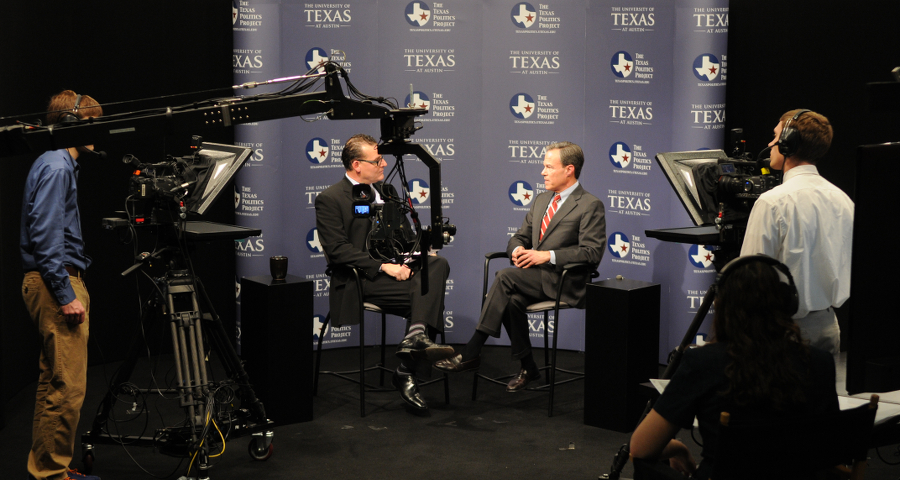
Texas State Comptroller Susan Combs presented her talk "A New Day at the Comptroller's Office: Simpler, Smarter, Faster" for the Texas Politics Speaker Series on November 1, 2007.

Dr. James Henson: Susan Combs was elected Texas Comptroller of Public Accounts in 2006. This was after, in 1988, when she became the first woman elected Agricultural Commissioner, after serving two terms in the Texas House of Representatives.

Prior to these forays into electoral politics, Comptroller Combs received her undergraduate degree from Vassar College. Her first work experiences include international advertising, Wall Street financial markets, and working in the federal government.

She returned to Texas, and received her law degree from this University; after graduating, she then served as an ADA in Dallas.

The Office of the Comptroller may seem to some of you like one of the less glamorous jobs in Texas. But it seems fair to note that periods of detailed work related to tax collection, accounting and revenue is frequently punctuated by moments of high visibility at the intersections of policy and politics.

And if you doubt the political aspects of the job, just consider that Susan Combs was preceded in the office by Carole Strayhorn, John Sharp, and Bob Bullock; folks not exactly known for being political wallflowers.

If her style seems more subtle than her predecessors', Susan Combs is no slouch herself. She's racked up three successful statewide campaigns, and at least from the outside, made it look easy. She now sits in the Comptroller's chair, during what are to say the least very interesting political times for anyone in a position of leadership in the State.

Join me in welcoming her back to the University of Texas at Austin.

(Applause.)

Ms. Combs: Thank you. Well, thank you. It's my pleasure today to give you a little bit of insight into what the job is about, and then of course to take your questions.

We know everything, and we do everything. We're the chief financial officer of the State, we're the treasurer, we're the tax collector, we're the bill payer, we're the revenue estimator which is actually a very, very important because the Legislature cannot spend money without our office saying how much there is to spend; we do post-payment audits for state agencies. That's kind of interesting.

If they've written a check and there's concern about, was the check actually for something that happened, we check on that to see whether they've complied with statutes, rules, et cetera.

And let me start off a little bit by talking about tax, which nobody ever likes to talk about. When I was prosecutor in Dallas, we had I sat at one table over here, prosecuting people, juvenile delinquents and child abusers; so then over on the other side would be the defendant, and then there was the judge in the middle.

And the my office, the Dallas County DA's office did not pay the salary of the judge. And one of the first things I did, in fact it was the first day I took office on January 2nd, I did a memorandum of understand, and MOU, with a neutral tax tribunal called the SOAH, State Office of Administrative Hearings.

We moved all of the ALJs out of the office, over to SOAH. I did it on the first day, because I wanted to be sure that people perceived that the tax process was fair. So that, it's been my belief that if people believe that the taxes are assessed fairly, the process is fair, that you're more likely to pay it.

So you move those over, on the second. We also then spent about a month developing a new tax case process, and a couple things I was concerned about was, I had heard out across the State that, Gee, I sent in my information, they said I owed some money and I hadn't heard from them for a while.

So I thought, Well, okay we will go ahead and impose timelines on us, and timelines on the taxpayer. And there was a particular reason for doing this. If you're at all connected to the law, you understand statutes of limitation. You have a certain period of time within which to bring a matter or you're out of luck. And the practice in some cases had been to what's been called, bust the statute; meaning that if it was a four-year statute, you might go along.

There was a case, a taxpayer got a refund of about $130 million and it went back eleven years. And I said, that's not good practice, not good business practice; if you're a business owner you want your money in or you want your taxes back. And so we had completely changed the tax case process; we've now added mediation.

We've added multiple reviews; if you don't think the auditor is doing the right kind of job, we don't go to the auditor's supervisor; we leave the audit shop and go someplace else. You will hopefully be convinced that it is fair.

We also took a look at how we spend your money. And one of the things that we're doing, on the fourth day I was in office I put up on the web, every single expenditures item by unit of the Comptroller's office. And what that means is, by unit I mean, pencil versus category.

Category would be, office supplies; item would be, pencils. And so up on the Web, on January 4th at about 4:00 in the afternoon, put up every single thing that we spend. Because I kept hearing that people didn't know how Government spent their money, really want to know how we spend the money, and can you please add more transparency to the process.

And so that went up on January 4; it took me a while to sort of massage some of the other state agencies. We have the legislative authority to make them report to us, in a uniform financial reporting system. So I got 20, about, other agencies who had the software capability and had the data encoded, to get down to the pencil level.

The other 180 agencies are not there, but it's all up on the Web, and so if you go to www.window.state.tx.us you can find this.

Well, we thought that was kind of nifty, and so then I added something else. I thought, Gee, let's go ahead and show how we write the actual checks, because one of the things people get kind of irritated about is, Well, it's still too arcane; how can I figure this out.

And so October 1, pursuant to a piece of legislation that I worked on with Representative Mark Strama, on the Web now as of October 1, every single check that -- it's a virtual check register. It is the date, the amount, the payor, the payee, of every single check in the State.

And we're the only state of anything like this size to do this; I believe that Missouri is doing something like that, but basically we're it. And we're pretty huge, and it is a searchable, mine-able database. And we're looking for thoughts -- if any of you -- try to search it, Gee, it's still not helpful, please let us know, because we're going to try to make it easier.

Technology is something we've been working on a lot, and we've gotten something called a Business Intelligence Tool. And it's sort of back to, If you're in business, you have no idea unless you keep data, how you're doing. What are your customers doing? How many widgets do you have? Are you selling widgets times your inventory? Is it first in, first out? How are you running your business.

Well, the State's business is what I'm taking charge of, and the tax case process is one such. And I didn't know, for example, and this Business Intelligence Tool has just been delivered September 15, if we have one auditor spending 30 days doing an audit and somebody else, exact same kind of stuff spending 90. I want to know why does the second guy spend 90 and the first person spend 30, and there's some ways we ca train that person, and it's all about data collection and gathering, to know what you're doing.

And we're such a big state. I mean, if Texas were its own country, this is pretty nifty; if Texas were its own country, we'd be the 10th largest economy in the world. And added to that I think, geographically this is important, Texas is bigger than France. And I think it's mindful to remind ourselves that France, no matter what they say on their food, we're bigger and we're better, and I mean, I'm sorry I get on kind of a rant about France.

We're also, just so you know this, we are also the niftiest-shaped state in the country. There are these children from these boring, rectangular-shaped states, and you know, you take a look at these little kids, third grade and fourth grade, how on earth, in a puzzle, how can they find their state? You take the name off -- our kids can always find the State of Texas.

So back to tax collection, which I know you're fascinated with. By the way, when I ask people if they'd like to contribute taxes, nobody raises their hand. I'm sort of at a loss to know why people don't want to fund Texas.

But nobody ever raises their hand. We do try to find out, though how we can make the tax process better. We also took a look at all of the money inside the Agency. And I got there, and I said, Well, gee. How many publications do we have? Nobody knew, so we started asking people. So they ran around and -- pieces of paper, there were 497 separate kinds of publications.

And so we began to save a bunch of money because we went online. All of you young whippersnappers use go online, and I'm the dinosaur Luddite but I'm nonetheless able to go online as well. So we've got all of that stuff online now; saved about a quarter of a million bucks on that.

And then I said, Well, how many forms are there? We never met a form we didn't like. We like forms. So we have about 5,000 of these. And we're trying to shrink those.

The old phrase, the check is in the mail, I hope never happens; we don't want the check to be in the mail. I got a bill passed to do what's called electronic funds transfer. It used to be that if you owed a tax liability of $100,000 you had to do an EFT. Partly, we liked it because of the float; we want to capture the float.

But it's also people opening envelopes. All these people opening envelopes. So I got a bill passed to bring it down to $10,000. And so as of January 1, if you owe $10,000 or more in certain categories of taxes, you will do it by EFT. We expect that to save a lot of stamps, a lot of peoples' time, a lot of other stuff.

One of the concerns that the Legislature had about that was, they said, Well, that's fine but how about the folks who really aren't sort of you know, computer literate. And so we're giving the folks until the fall, September '08, and the -- for their tax returns to be digital, giving them until then. But the dollar limit's raised to 50,000.

You know, I spend a lot of time out in rural Texas, and we've got, Gee, 2.9 million people in the State, in small, non-metropolitan areas, which is by the way, larger than 22 other states' populations. We're a very big state. But those folks are out there, they really don't have a T-one line; even though we had the Telecommunications Infrastructure Fund, which was to deliver the ability to do bandwidth lots of places, they don't necessarily know how to do it.

And I ranch in an area where we're beyond the 3-mile limit, and so we have to get a satellite. So for a lot of these people, paying their taxes online, doing a lot of this online, is sort of a struggle.

We also took a look at other ways we're spending money, and we have done what's called a business process improvement. We've been doing that now for about six months. Yesterday was the day we ended Stage One. And we're finding sort of weird savings. We've already saved about $2.3 million. Give you an example, there were five separate toner cartridge contracts for -- within the agency. And we said, that's crazy, Why not have one contract; well, we now have one contract, we saved $73,000 by having one contract.

We got legislation to let us quit publishing a duplicate health claims guide which is already being done by the Health and Human Services folks; that was a quarter of a million.

We had about $500,000 of IT folks outside external contractors; let those folks go, we're doing it all in-house. We've saved about $2.3 million, basically by just sort of following the motto, simpler, smarter, faster.

Everything we do has to reflect our central vision, which is that, it's your money. All of this money is your money; the Treasury has about $37 billion in it, we write all these checks, there's money comes in, money comes out. But if we think of the funds as sort of fungible, as not real that doesn't work very well for you folks, who wonder, why on earth are they charging me these taxes?

Procurement, buying stuff, there was an agency called Texas Building and Procurement Commission, and through a bill, the procurement arm came to me as of September 1, and so we are now ramping up looking at other states to see how we could do what's called strategic sourcing.

General Motors and Ford, which is interesting, General Motors and Ford buy stuff together. They have a joint buying co-op for certain things like steel, et cetera. And so if General Motors and Ford can do it, seems to me that we can do it as well.

So we're taking a look at one-stop shopping, managing the contracts. One of the things we don't do well in the State, we sometimes feel like we get out-lawyered. We write a contract for something, a good or service whatever it is, and then the vendor, who is of course talented and bright and aggressive, will write a contract that may be tilted their way.

We have to be very clear-eyed about managing the State's resources, and saying that we're not going to end up getting rolled. Again it's our job not to get the State rolled on these contracts.

Let me give you a couple of quick things we're doing that are sort of interesting. We took by the way, for your information, the confidential information off the Texas Tomorrow Fund. Any of you on a Texas Tomorrow Fund contract will -- all of your personal information is now gone; we took all that stuff off. We're very, very mindful, this is kind of an interesting issue for us, data security. Really, really important for us; we get about 65,000 hack attempts a month on the computers. And so it's very important for us to be sure that if we have folks' confidential information, we don't want to give it out.

Unclaimed property; you may have had an apartment rental contract, let's say three years ago, and you put down $150, and then you forgot to get your money back; well, that money, the apartment building guys put that money into the unclaimed property fund, and you can go online and take a look and try to get it back. We have streamlined that process. We've raised the limit now to $5,000 we can do it overnight within 24 hours to get your money back.

But Texas does try very, very hard to get your money back. We have about $1.7 billion total that we're trying to give back. Some of the issues are like, John Williams. Is that John A. Williams, John Z. Williams, John D. Williams, what town is he in? And they move, folks move.

California, by contrast, has $ 5.7 billion in unclaimed property and the federal courts have stepped in, because what happened was, in California this money was sitting there being used to balance the budget. And instead of making concerted efforts to tell people, Here's your money, come and get it, they spent $15,000 a year and the federal court said, that won't work; you're not really making any kind of effort to give people their money back.

We are the unclaimed property, we've reduced the inventory of pending claims by about 35 percent. We also do research. So I've mentioned tax collection, I've mentioned bills paying, that kind of thing. Let me tell you about research.

When I was Agricultural Commissioner, you made remember this evil person; there was a really terrible person named Susan Combs who took all of those soft drinks out of elementary schools, and said -- Well, that was me. And I did that because I used to handle starvation cases; I handled cases where children were starved by their parents, and they would end up with failure to thrive, and some of them would have brain dysfunction.

And what we are now doing, and I feel fairly strongly about this, we are now feeding our children to death. And so in 2003, I tried to get legislation passed which I was not able to get passed, but I got the power by fiat, to remove FMNVs, foods of minimal nutritional value, from schools.

And so with that in mind, we're taking a look still at what the effects in the State are, of obesity and we published a report that said that it costs Texas businesses an estimated $3.3 billion a year in '05, and it will be $15.8 billion by 2025, if we don't do something about this.

P.E. How many of you had mandatory P.E. in middle school? Okay, we'll you're lucky. Because what's happening now is that mandatory P.E. is not happening, and we tried to get legislation passed this session to require P.E.

I remember well, sweating profusely doing P.E., and I'm sorry; horses sweat, men perspire and ladies are all in the glow. And so I glowed through middle school and high school, but we had P.E. And we could not get a bill passed to make it really mandatory because other folks intervened and said that some other activities are more important.

So the Comptroller's Office gets to do things like, figure out how much revenue there was, and the fiscal note process, determining what something costs, is a function of the office. So I put a fiscal note of zero on a $20 million rider in the bill pattern for the Texas Education Agency, because I said, if we put $10 million a year in, to persuade schools to do P.E. for middle schoolers, that they will generate at least the $10 million a year. We will zero cost it. And I'm a firm believer that if we can get these kids to exercise, and not sit in front of a machine all the time, then we can make some progress.

We're also doing an energy study; that will be out in January. Very, very interesting from a policy perspective. We never look at, in fact nobody in the country really looks at what is the net unit cost per kilowatt hour, of the oil sector, the gas sector, wind, solar, nuclear, water, coal, you name it; ethanol, biomass, biodiesel; and so we're taking a look at that. Because when you add subsidies, abatements, additional costs, transportation, et cetera you get some very interesting results, and we would like to have that out for folks.

We're also getting data out to help create and retain jobs. A lot of people come here; I saw something very interesting in a town outside of Houston. A business owner, somebody want to come into, move into this town, in 45 minutes they spit out for him, at this Chamber of Commerce, they spit out a kind of a GIS thing.

And it has every single location this is in Fort Bend County, every single location with a loading dock, where all if that's what they needed; where all the water lines are, power lines are, et cetera, et cetera, et cetera so that they can come in and decide if they want to do business there.

We're spending a lot of time trying to get together development data for people; we think it's pretty important.

How is the economy doing? Well, great, actually; sort of. This is political obfuscation; we're doing okay, $1.5 billion in spare change showed up at the end of the Session; $400 million of that actually came from an agency which had its funds swept; one agency did not spend all of the money allocated to it, and so all of those are swept at the end of the biennium.

So that would have been $1.1, but sales tax revenue has been fantastic; $10.9 last year. The year before it was like $12-something, unbelievable. Oil and gas sector is booming, so you've got about one and a half billion on top of the seven we predicted; we're at 8 and a half billion dollars surplus going into the next Session, which I think is kind of important.

Housing. Housing is really interesting. You've been hearing about the subprime market -- new housing permits in Texas are down 25 percent. However, sales of existing homes, the number of sales is down not too much, and the prices have not taken a big hit generally.

When the economy of the U.S. is booming, we get about 200,000 new jobs every month, which is a lot. Right now it's at about 100,000. In September, it was 101,000 new jobs across the country, and Texas was responsible for 25,000 of those.

Which is grossly disproportionate to our size, second largest state but we're not 25 percent of the population; we're about -- gee, about 8 percent of the population of the State [sic].

So I'm watching the clock, we do a lot. We really do know everything, and that is a benefit and a burden. We're in last point, we're in litigation right now, about availability of birth date information for State employees.

And when I was in the Legislature, I got a bill passed, in the House, which kept confidential the information of jurors. We had cases of jurors sitting there I'm sorry, jurors were in the panel, and the defendants were reading the jury card.

And they were looking at, Oh, Mary Smith, here's her phone number, these defendants were calling from the jail at night, Hey Mary, golly gee, I sure hope you vote for me on the jury panel, which seemed a little bit intimidating. And so we got that information withheld.

With respect to identity theft, we had a request by somebody, to get the month, day and year of every single one of my employees at the office. And we asked why, and I can understand year, I can understand month, but when you get to month, day and year that is a huge amount of information with respect to identity theft. And we're in litigation about that; I don't know where it's going to go, but it's something that I do worry about. This would potentially mean that the secretary in every sheriff's office, the secretary in every school district, every single member of the public who works anywhere in the public could hypothetically have all of their personal data about month, day and year public.

So that's something that with respect to open government, which I'm very committed to, there's open government with the limit of protecting my folks that I work with. So, that's kind of an overview, and I have watched the clock, and I'll be happy to take any questions.

VOICE: As you know, there are several propositions on the ballot for the election, and several of them require lots of money. And so if all of those are voted for, in, by the citizens of Texas, how do you expect that to affect the budget.

Ms. Combs: Well, vote let me differentiate between voting in bonding authority, and then issuing bonds. For example, Proposition 12 is $5 billion for bonding authority to issue bonds.

I'm on the Bond Review Board. We will not issue a bond unless there is the revenue available to pay for it. And so that's really part of where I come in, is that, Okay, if they want $5 billion, is the revenue there?

There's a proposal up next month for about two and a half billion dollars that's already been authorized, two and a half billion dollars and we're sort of checking our numbers to see if the revenue is available for the bonding period while it's issued, to get the money.

So, yes. It sounds like a lot of money; I'm not minimizing it at all. But the question really is, the check and balances, you don't issue the bonds until you are absolutely certain that you have the money to pay for them.

We are constitutionally required to have a balanced budget; we can't go in the red. And so if we found out that we have a legal obligation to pay for some bonds, we would cut someplace else. We're simply, we don't do deficit spending. We can't do it.

VOICE: Well, it's been too long for you to remember, but out of fear of being given work to do, I was the guy at TDA who would hide in the bathroom when Beverly Boyd gave word you were on your way upstairs.

But I have a couple of questions for you -

Ms. Combs: We love Beverly.

VOICE: -- I have two related questions for you. One, how do you square your bureaucratic obligations with your political ambitions; and in a related vein, you've moved from Ag Commissioner now to Comptroller, and what ways does this affect your ability to move up the political food chain?

Ms. Combs: Well, one, I don't want to move up. And I say that unequivocally; I want to stay Comptroller; it's a great job. I don't want to be Governor, don't want to be Lieutenant Governor, don't want to be a U.S. Senator. So it does not I have no political ambitions to worry about except getting re-elected.

I was in China, and somebody asked me, I was in China talking to some Ag students in September. And they said, Well, gee. What do you do if people don't like you? Kind of a big question. I mean, hand them more combs and try to bribe them.

But the point is, I guess what I would say is, you know, if you do your job right, that's the result that I want. And I'm liberated, I'm really liberated by not wanting another job. It's really, really handy.

VOICE: Just out of curiosity, I'm very curious about the $400 million in swept funds from an agency. It was one agency?

Ms. Combs: Uh-huh.

VOICE: Do you feel comfortable saying which one?

Ms. Combs: TEA.

VOICE: Could you tell through their budget what it was not spent on?

Ms. Combs: Uh-uh.

VOICE: Curious.

Ms. Combs: We just had heard that there was a lot of money coming. And so it was $400 million. Listen, be happy. That's perky.

VOICE: Yes.

Ms. Combs: I don't I have no idea what it didn't get spent on. But that's something that the appropriations process will have looked at. Gee, what strategy didn't get done? The Legislative Budget Board would always say, Did you do all the things -- when I was Ag Commissioner, Did we check enough gas pumps.

You know, we do check gas pumps, and for weights and measures. If you bought 15 gallons, did you get stiffed?

Yes, sir.

VOICE: In relation to that question, at the beginning of the next fiscal process, how is the surplus that you're speaking of going to affect the budgeting in the State for the future bienniums?

Ms. Combs: Well, it's going to be fine for the next biennium. I don't know what the margins tax, the new revised franchise tax is going to bring in. We will not have any hard data until all of the money comes in by August 15, and then we won't know who didn't pay correctly until November.

What I think is going to happen at some point is, as property tax relief continues to come and you've still got to have this money swept aside to do that, and we're going to have the money, the question would be, Does the margins tax replace the franchise tax. Is everything held harmless so that you have all of the money that you're supposed to have.

The Legislature was extremely disciplined this time. They did not go out and spend the money, and for that I commend them, because they kept asking me, Do I know how much money will come in the margins tax, and we did a survey.

And the survey was really kind of like Jell-o. We sent out 3400 surveys; only 1600 people replied. By Jell-o, I mean, no certainty, no hard anything. And there was no requirement to be accurate, there was no penalty for not being accurate.

And so, one enterprise with $2 billion in revenues said their tax obligation would be 10,000 bucks, which I thought was a little low. And so we have no idea how it's going to work.

But I think it's important for us to sort of be prudent, because I do worry about some things coming. We've got some costs coming up, Medicare and Medicaid, Medicaid in particular is going to be a huge, huge dollar number. And it's right behind the horizon.

And so if we spend all the money now, we'd be coming back to people and saying, Give us more money, and that's not a good idea. That's lots of big stuff, big ticket items down the road.

VOICE: They're going to let me ask a question, I guess. You know, I was struck by well, I was struck by a few things. But I was struck by your reference to getting things passed through the Legislature, you know, as once you when you were Ag Commissioner and now.

Could you talk a little bit about what that's like? I think for a lot of people, it's not something they see as much, but the way that the statewide officials lobby the Legislature, essentially. Could you talk about what that process is like? Especially given that you were once on the other side.

Ms. Combs: That's been a help, having been in the Legislature because I sort of know how hard it is. What you what any agency does, all agencies, you have to have a legislator carrying a bill that you try to get. And then so I would carry bills, I mean, I would have legislators carry bills and then they would ask me to go work the committees. So I would go to the committee, and I would say, Representative X has got this great bill which I'm very much for.

And I would maybe go testify, quote, in support of, as opposed to in favor of I'm sorry, testify on, instead of in support of. Although as a statewide official, I often testified in favor of this is a weird arcane thing.

There's three boxes you can check: you are there as a witness for; you are there as a witness against; or you are there as a witness on. And virtually every single state employee from an agency checks the "on" box. And I would get a little more bold and I would check, "in support."

And they knew if I showed up, I was in favor of it. And I would work the committee; I mean, I had people for dinner, I worked everything, and I know how hard it is to get things passed. Thousands of bills are written, and not so many thousands are passed; and if I didn't take it personally, and go work it, it wasn't going to happen.

And as I say, having been there, I'm kind of an autocrat, and I wanted the bills the way I wanted them. But that's not the process. The process is, there's going to be change, and so you have to understand that.

And maybe you get positive improvements, or maybe you have to think about incrementalism: I'll get something this time, and I'll get some more next time, and I'll get some more the time after that.

I think in the State it's much easier to do that than in Washington. Washington is really much tougher; and we actually get more stuff done; things did get done this Session. Lots of things actually happened, and as I say, having been there --

When I was in the Legislature, I certainly thought that, you know, agency folks were all, you know, they're all kind of crooked; they're all doing something bad. But now, I'm one of them. And so now I'm one of those evil people, and I understand that I have an obligation to build trust and confidence in the legislator's mind.

They have to believe that I won't lie; they have to believe that I will give them good information, because there's always another time. And if you misrepresent something, it's really, really dangerous, and it's short-sighted, and it's not honest. Yes, sir.

VOICE: In terms of accounting, is the Texas Comptroller's Office concerned about the cost involved in the convergence of U.S. GAAP and international standards? And if so, how does the Texas Comptroller Office plan to handle these costs?

Ms. Combs: You mean, government accounting accepted accounting principles, GAAP?

VOICE: GAAP, yes.

Ms. Combs: You mean, GASB 45?

VOICE: [inaudible]

Ms. Combs: Are you worried about GASB 45?

VOICE: Uh -

Ms. Combs: Give me the question again, please.

VOICE: Yes. In terms of accounting, is the Texas Comptroller's Office concerned about the costs involved in the convergence of U.S. GAAP and international standards?

Ms. Combs: Well, I'm not quite sure what you mean. Our office is supposed to adhere to generally accepted accounting principles, GAAP, GAAP analysis. And we have deviated somewhat from that with what's called GASB, the Government Accounting Standards Board, which is in Connecticut, and there was a GASB 45, which is a ruling by these folks in Connecticut about how we represent various possible obligations and liabilities.

And as the Comptroller, I'm supposed to put together what's called the Certified Annual Financial Report, which is I'm supposed to accumulate all of this stuff from the UT System, the A&M System, and all of the state agencies, including ERS and TRS.

And there's a lot of conversation about, Does government expose its liabilities? Does the public understand what its liabilities are? And I'm now being an old lawyer: If we do not have a legal obligation on for example, it's what this particularly is about is, other post-employment benefits: if you're a retiree and you're post-employment, about those benefits.

And I said, If we have no contract, we have zero contract, I do not have a contract of any kind, post-employment. And I'm not willing to have the State, on paper, assume a liability that it does not have in fact.

However, the ratings agencies, Standard & Poor's, Moody's, and Finch's would like to know what this creature would look like; so we're going to put this guesstimated number of the liability of the State in the notes to the financial statement. But I am not going to put us in the position of saying these are actual liabilities, because we again have a constitutional prohibition against spending any money beyond the two-year period.

We can't go out 20 years and agree to do it, and in every contract we write, it's if the money exists in two years. That's probably not answering your question. Is it sort of what you were after? Sort of?

VOICE: [inaudible]

Ms. Combs: But this is a national standard, not international. Yes, sir?

VOICE: I was curious about what you were just talking about, the post-employment -

Ms. Combs: OPEBs.

VOICE: Okay. So that's for -- could you go into a little bit more detail -

Ms. Combs: Other post-employment benefits. This came up in the private sector under FASB, which is the Financial Accounting Standards Board -- I love this; you know, it's kind of awful that I know this stuff. But anyway, at FASB, FASB 105 or -06, what happened was, FASB said, General Motors, you guys, you've got to reflect all of these employees and their possible health stuff later.

Well, people, their boards of directors saw these gigantic numbers and they said, Okay; we are getting out of the retirement health business. Seventy-some-odd percent of the corporations in America saw these numbers, scared the heck out of their boards, and they dropped modified or dropped health benefits for their employees.

So that has been out about eight or nine years, and so GASB, son of FASB, came in, and it was the same thing. And again some states Illinois has a lot of contracts, but we don't have a contracted relationship; we are an at-will employment state. And we can basically fire every state employee with no grounds. They can come back and sue on various other equal protection claims, but we don't have those claims.

What I was worried about was we every single two years, every budget cycle, they start from scratch, looking at how much they're going to pay for these employee health benefits. They've dropped them; they've lowered them, and two years -- in '03, we were short of money, so they dropped them.

And so for us to predict that we absolutely have a known obligation, A, we can't possibly know it, and no accountant will tell you, or actuary will tell you, you can know something out 50 years or 35 years.

And secondly, we're prohibited. We are prohibited from assuming that is a real liability. So what does that mean for a state employee? Well, state employees actually supported the legislation that got passed, because they said, If people see these large, scary numbers that are the mythical beast, then they will end up firing more employees or changing stuff.

And so we tried to strike a balance between transparency, disclosure, which we think is real important; and also, not assuming a liability that we do not legally owe.
Yes, sir?

VOICE: Yes. I'd like to ask a really detailed question about accounting -

Ms. Combs: Go for it.

VOICE: No, actually I want to ask about higher education. Where do you think the consensus is in the State in terms of higher education funding right now? It seems to me, if we were to look back, in the kind of long sweep of things, we have undergone some change in terms of the Legislature's sort of commitment of funds to higher education in the State.

I'm wondering what your feel -- I mean, this is more of a feel than a detailed question, I suppose, although you have a look at the numbers.

Where do you think we are, in terms of the State funding for higher education versus an increased reliance on tuition and these kinds of questions?

Ms. Combs: When the State made the decision legislatively to de-regulate, at the request of the institutions, the institutions were feeling choked. If the States' not putting in enough money, and I need more money, I have to be out of this box, and so I've got to be able to change fees.

So they did that. They've raised fees a number of times, Gee, the average tuition increase in the last, I don't know, 12, 13 years has been about 11 percent.

So they de-regulated. There is no move to go back. And legislatively, people really are struggling with, in the Legislature, they understand how critically important higher education is. And I was talking to some folks from UT. Texas, with 23 million people, has two flagship systems, UT and A&M. California, with 31 million, 34 million people, has nine. And so you really have to ask, what are we going to do about it?

The problem that I see is, there's kind of an amorphous desire to have higher education, but a non-precise solution for funding it. And a lot of conversation this Session about scholarships. You probably read a lot about the Guaranteed Tuition Fund. And we shut the Guaranteed -- what I call TTF, Texas Tomorrow Fund I, we shut it down. You can't get into it anymore, but they established TTF 2. And TTF 2 comes on board next fall, and that will be a different way to fund it.

TTR 1 was absolute, guarantee, and the State projections didn't work out. The revenue, the income did not match the out-go, and so you had an X, and we are short, underwater some number. X billion, Y billion, Z billion, some number.

But everybody believes in education. And I mean, again, it's sort of back to the amorphous. Oh, we love education. And I'm personally a supporter of Texas Grants; I'm a supporter of scholarships. But I'm also a supporter of people getting their kids to go.

I was talking to a gentleman out in San Angelo. And they offered full tuition to 60 freshmen, 60 sophomores, 60 juniors, 60 seniors, in San Angelo, full ride, everything, tax, title and license -- if these kids would go. So the four times six is 240 kids, and they only had ten applicants.

What we're seeing in the State is a kind of a shift. Folks' kids are working longer; they're not actually necessarily in school from 18 to 21; they may be in school 19 to 27, or 25 to 32, and so they're postponing it may not even be so much a scholarship as, I'm foregoing salary, I'm foregoing income from outside.

And I don't know how to address that part. This the guy at Angelo State was very horrified; out of 240 young men and women, only ten took it and only two have graduated.

So there's a lot to do. We're going to try to do some things in public education to help get them ready for folks like you in higher education. Virtual schools, et cetera so that people can actually do some work in the daytime and go to school at night.

But the real challenge is not so much the cost of school for most people. It's, do I have the time, can I delay whatever else it is in my life. Do I can I forego the income.

And maybe that's not true but it's certainly true of some schools that I talked to. The board members U of H, I'm told the average age is like, 27. Well, that's a very different population. My kids all went to school, 18 to you know, 22. I went to school, 17 to 21, so we all kind of went through at the so-called normal time.

Well, that's no longer normal from what I'm told. And that's something we have to address: How do we get these people, whether they're 18 or 25 or 27, how do we get them the post-secondary training that they need for the economy. Because we're going to get run over.

Last question?

VOICE: All right. Compared to other state legislatures, the Texas Legislature is often considered less professional, given the fact that it meets only every other year, and has shorter sessions than a lot of states. Do you think becoming more professional would be advantageous to the State of Texas and to your office, or do you think the current system is sufficient?

Ms. Combs: I think it's a -- not correct statement to say that we're not professional, the Legislature. Those folks all have other lives; they are all professionals in their other lives. And I when I was a legislator I though it was pretty great that we were out of town, because we couldn't do stuff to you, or for you.

And so I think there's a lot of feeling that if these issues are really hot, you'll get them done; if there's a special session, you'll get them done. But they are professionals. These are really competent people, by and large, who work hard, they have other lives, they're doing something else.

They couldn't have gotten the vote it's a job interview process when you run. You're interviewing the voters. And they're interviewing you and saying, Gee, we trust you to be smart enough, competent, whatever it is, and so if you pass the interview test, then you get elected. And these people did pass the interview test.

Dr. James Henson: Let's thank Comptroller Susan Combs. Thank you.

(Applause)

Ms. Combs: Thank you.

Texas Politics:
© 2009, Liberal Arts Instructional Technology Services
University of Texas at Austin
[Home | About | People | Speaker Series]