Texas Politics
 
   
Texas Politics Speakers Series Transcripts

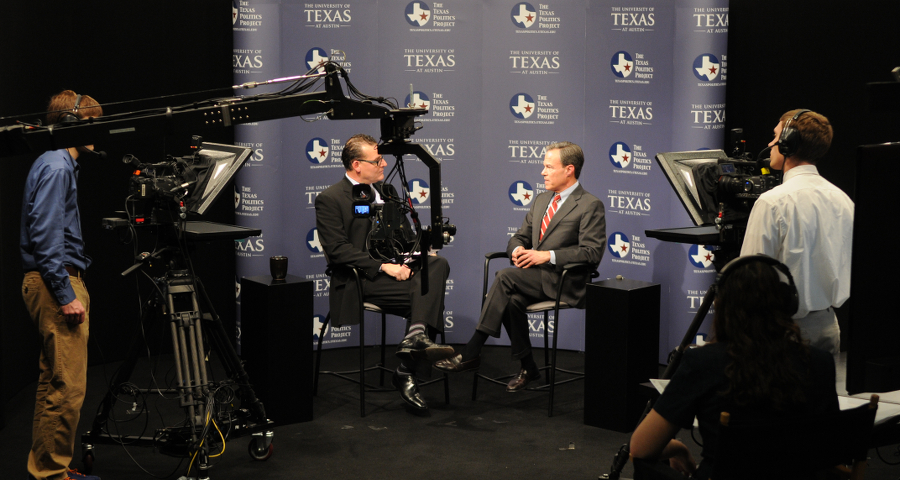
Texas State Senator Kirk Watson presented "Ten Rules for Politics, Leadership and Positive Change" for the Texas Politics Speaker Series on November 15, 2007.

Dr. James Henson: Okay. Welcome.

Kirk Watson is the Texas state senator for District 14, which includes most of Travis County and the city of Austin. He's vice chair of the senate Committee on Ttransportation and Homeland Ssecurity and serves on the senate committees for Jurisprudence, Nominations, Business and Commerce and the Subcommittee on Emerging Technologies and Economic Development.

He's a partner with the law firm Hughes & Luce, a mediator, a public affairs consultant, and, in a role that's made him familiar to a lot of people in this room, is a former mayor of the fine city of Austin.

Though we surely didn't intend it this way, he also really took one for the home team by running as the democratic candidate for attorney general in 2002, a historically tough year to be a democratic candidate for anything, and, yet, he comported himself very well and got a lot of very positive reviews in that effort. He was elected to the Texas senate in 2006, and after completing his first legislative session, he was named the Legislative Rookie of the Year by Texas Monthly magazine.

When you ask informally around the political community about Kirk Watson, you invariably hear -- and no offense intended to any of his colleagues -- that he is one of the smart ones. And so please join me in welcoming Senator Kirk Watson to the University of Texas at Austin.

(Applause.)

Senator Kirk Watson: Thank you very much. That was great.

Well, thank you all.

And thank you for that introduction. I really appreciate it.

What I thought I would do today is be pretty informal with you but talk to you about, in politics and in life, different rules that I've learned and give you my top ten rules of politics or leadership or how to bring about positive change. And let's just start.

Rule Number One: Throw away the labels. Too often, I think, we do this in life generally, but we really do it in politics, and that is: We put labels on one another. We do it in life. I mean if you go to the University of Texas, you've got a label on you. Right? If you go to Texas Tech, you've got a label on you -- or go to Baylor.

We put that label. In politics, it's democrat and republican. And once we get the label on people, all of a sudden, we abdicate any responsibility to ever hear that person again because, after all, once I've got a label on you, I know everything I need to know about you, don't I? Oh, you're a republican? Well, that's all I need to know. You're a democrat? Well, you're environmentalist.

Oh, you're with the chamber of commerce? I don't need to know anything else, and I quit listening. We really do it too much in politics. The republican and democratic labels mean something. They're important. But when we stop ever hearing one another as a result of that label, then things come to a dead stop, which leads to the Rule Number Two.

Rule Number Two is, Listen carefully and speak plainly. Another way of saying this might be, Create different opportunities to hear one another. I'll give you a good example.

I've got an 18-year-old son in my house. He's a senior in high school, and he'll be going off to college next year. And he thinks he's the smartest guy in our house. And I am.

(General laughter.)

Sen. Watson: So what that means is every now and then, he and I end up circling one another, you know, like a couple of bulls, trying to figure out what's right. And we argue about things. Actually, we have a great relationship, but, you know, that just kind of happens.

And what almost invariably happens is, after we've had a discussion, maybe a heated discussion, that evening or the next morning, after there's been some time go by, one of the things that occurs is he will say something or I will say something and, all of a sudden, the lightbulb goes on; we hear each other for the first time. We'll say, Oh, that's what you need? Oh, well, we can -- I know how we can do that and get you what you want and get me the same thing or get me what I need at the same time.

Many times we don't create opportunities to hear. It happens all the time in public policy.

At the city council of Austin, Texas -- I was mayor -- as was indicated, I was mayor for several years. And we have these things on Thursday nights that we call public hearings, where there ain't nobody hearing nothing. I mean public yellings, public screamings or -- I mean you can call it whatever you want, but there is no hearing going on.

One of the things that I have tried to do in politics and in trying to bring about change sometimes is to see if we can figure out something outside the box, where people actually hear what's going on.

For example, we recently had a very contentious, very difficult, very hard discussion about some roadway projects in central Texas, and one of the things that I did was -- I put the groups that were fighting and the Texas Department of Transportation -- I put them through a mediated process. In fact, the TxDOT officials said that the Texas Department of Transportation had never done anything like that.

What we ended up with -- we used the University of Texas Dispute Resolution Center to do that very long process, involved a lot of the public coming in. When it was over, we had one group saying, I can agree 100 percent with that, the second group and third group both saying they can agree 100 percent. The fourth group said, Oh, we can agree 75 percent.

And the Texas Department of Transportation said, We'll go along with doing what got that level of agreement. We created new ways to hear and allowed people to speak plainly and listen carefully.

Rule Number Three: You're not going to ever, probably, meet everyone's concept of perfection, so don't try. You're not going to meet everyone's concept of perfection no matter what you do. And many times, we define consensus in the making of public policy and politics.

When people hear the word "consensus," that means 100 percent to them: Oh, if we're going to have consensus, everybody must agree. But that's really not what that means, because many times what happens is -- if I demand 100 percent, if I've got to meet everyone's concepts of perfection, here's what happens. I've got to do what you need, I've got to get what you need, what you need and what you need and what -- by the end of it, what happens is either we've got something that's totally impractical, because we've just piled everything on it, or what happens is, I'll get you what you want, what you want, what you want and what you want, but you decided you didn't get everything you want. So you're going to stick a -- put a stick in the wheel -- the spokes of the wheel of the bicycle and bring it to a dead stop.

Well, you're not going to meet everyone's concepts of perfection most times in public policy. So don't try. You got to move forward.

Here's what I suggest you ought to do. You ought to follow what I call the 84 percent rule. If you're getting something, if you've come up with an idea that 84 percent of the population would say, "You know, that's not exactly how I=d do it; in fact, there are parts of it I don't agree with, but it's progress, and it's moving things forward; I can go along with that" -- if you can get 84 percent of your constituency, whatever group you're dealing with, to be able to say that, take it and run.

Now I see some of you looking -- I look at some of your faces. You're thinking, A84 percent? How did he come up with 84 percent? That's a weird number. Why not 51 percent? Why not 60 percent? 84 percent?" That's what I was re-elected mayor with.

(General laughter.)

Sen. Watson: You know, that other 16 percent can go jump in a -- actually, that's not -- I care very much what they think, because I may need them on my next deal.

(General laughter.)

Sen. Watson: But the point of the matter is no matter how smart you are and no matter how hard you work, no matter how pretty you think you are or how good the idea is, you know, there may be 16 percent that are just going to be against it. So you need to -- what I say is follow the 84 percent rule, grab it, and move forward to make progress.

Now, there's a flip-side of the coin to that rule. If you can't meet everyone's concept of perfection and you're not going to try, the rule ought to be the flip-side, too: Don't demand your concept of perfection. Don't demand your concept of perfection. Instead, work with people and try to come up with an 84 percent where you're getting 84 percent of what you want, or whatever the right number might be.

You know, the truth of the matter is one of the ways I try to lead, one of the ways I try to move legislation or doing whatever I do is lay out a broad goal, set out broad parameters, but then not care quite so much about how it might get done, because then you get into the debate of, Am I getting 100 percent of what I want. Try to set out the broad goals and broad parameters and then not get so worked up in the details that you can't find the 84 percent and move forward.

Rule Number Four: Be biased toward action. Be biased toward action. You know, the truth of the matter is I don't have time and I don't have a lot of faith in people that find themselves in politics or public policy and they are so afraid to move forward. I think people ought to be biased toward action. But, you know, I get it.

A couple of rules of that. One is, you know, there's great fear of failure. We all fear being called a failure. And in politics and public policy, you only have to be wrong a little bit. You may have something that's 84 percent really good, but they're going to focus -- a lot of people -- your opponents, the media and others are going to spend time focusing on that 16 percent you didn't get right.

And so the fear of failure many times paralyzes people that are in politics, because they're worried about the next election or they're worried about the TV commercial that's going to look bad for them. Well, I'll just lay it out there. I believe that there is value in failure. Now, I don't think you ought to try to fail, and I think you ought to try to do what needs to be done and you're shooting for the best deal, but there's value in failure.

If -- and that value comes in if you don't become a turtle and pull into your shell and never do anything again but, instead, you step back and you say, Whoa, that didn't turn out the way I expected; so here's what I'm going to do; I'm going to figure out why it didn't, and the next time, I'm going to do things differently.

I promise you -- I won't tell you what they are, but I promise you there were some failures along the way. There were failures at city hall, and there were failures even during this session where I didn't get everything that I wanted to get, even though people were saying nice things about me. Well, what we do is we meet and try to figure out, "Why did that not work that way," so that the next time, we can continue to be biased toward action.

But there's another part of being biased toward action that people become paralyzed with, and that is the fear that the better deal's going to come along, particularly in public policy and politics.

If I say, "Here's the way I'm going to lead you; here is what I'm going to do," and then tomorrow or next week or the next month or even a year from now, somebody comes in and says, "You know what we should have done," and everybody goes, "Oh, yeah, that's what we should have done," people get paralyzed, fearful that they're going to be criticized that the better deal came along, so they do nothing.

In Austin, Texas, in 1972 or '74 -- I can't remember now -- Austin bought four-and-a-half blocks, including the block where the new city hall is located, right there on Cesar Chavez. That year, they built a temporary council chambers, "temporary" being the operative word. Only in Austin, Texas, would something 30 years old still be considered temporary, because everybody was afraid to move on that four-and-a-half blocks, for fear -- and they were always worried, What if a better idea happens; what if somebody brings a better idea.

And so nothing happened for literally 30 years. I promised that when I was mayor, we were going to do something with that four-and-a-half blocks and we were going to knock down that old, temporary chambers, which we did, and build a new city hall, which we've now done. Now, I learned this the hard way, waiting for the better deal to come along.

I've been married -- it'll be 29 years next year. My wife and I have known each other since elementary school, and we started dating when I was 14. But the first time I asked her out, she turned me down. 1972, Boswell High School, Saginaw, Texas, homecoming, I went up to her and I said, Liz, will you go to homecoming with me. And she looked at me and very matter-of-factly said, No; I'm waiting for someone else to ask me. Well, we really don't have time for me to go into how bitchy that really is, but -- and I'm obviously over it.

(General laughter.)

Sen. Watson: But here's the life lesson. The girl was waiting for a better deal to come along, and it didn't. She got me. You can't wait for the better deal to come along; you have to be biased toward action.

Rule Number 5: Never forget that hope matters. Hope matters. Too often in politics, those in elective office are so geared at just getting reelected or just geared at whether or not everybody's going to like them that they forget why they ought to be doing it. And that's because they're in the business, if they're doing it for the right reasons, in my view, of hope. They're in the business of creating hope.

I'm not one of those political politicians, political figures, that will ever tell you I pulled myself up by my bootstraps, because I didn't. Now, Don and Billye Watson, my parents, did. But they laid hope and opportunity at my feet. Now, they demanded that you work hard, they demanded that you seize it and that you move forward, but I now feel like because opportunity was laid at my feet, I have an obligation to assure that hope is always what I'm after for other people.

And I also kind of learned this the hard way. Now I'll give you a little personal background here.

I'm a testicular cancer survivor. I was diagnosed in 1992 with testicular cancer. That year, I had three surgeries and chemotherapy. They thought I was going to survive and thought I was well. I went back to work like a mad man, and two years later on a routine CAT scan, they found another tumor in my abdomen related to the original cancer.

So they went in, and they cut me from here to her and stripped out all the lymph nodes, and that was '95. That was 12 years ago. So I'm a cure. I'm well, but I tell you that to give you some background.

Again, Liz. Liz and I have a good friend who is -- I guess he's in his early 60s now. And he recently left his wife of many, many years. Kids out of college, you know, that -- and he married himself a new lady who, if I'm charitable -- yeah, she's 30.

So Liz and I are out at dinner one night and talking about this guy and his new bride, and I said, You know, Liz, she's going to want to have kids. She said, Well, of course, she's going to want to have kids. She said, Kirk, I'm sure they've talked about that and that's part of the deal.

I said, Well, don't take this wrong, baby, but if something were to happen to us or to happen to you, I don't know that I could fall in love with a woman of childbearing years; I love my family; I don't know that I would want another family. The same look as in 1972. She looked at me, and she said, Kirk, with all they've cut off of you and all the cutting they've done on you, I don't believe you're going to have a bunch of women of childbearing years knocking down your door.

Here's the lesson: Hope matters.

(General laughter.)

Sen. Watson: Even when there's no hope, hope matters. We have to all be looking for how we grab the hope and we find it for other people.

Rule Number Six: Have a short-term focus, but with a long-term vision. A short-term focus with a long-term vision.

Let me just tell you, first and foremost, this is one of the gifts of cancer, and that is -- when I was diagnosed at 32 years old with testicular cancer, if you=d have said to me -- a week before the diagnosis, if you said, "Kirk, where do you want to be ten years from now or fifteen years or twenty years," if I was candid with you, I could have outlined it within about a week of what I thought I was going to be able to do. And of course, that's how we all kind of live our lives.

Well, one of the gifts of cancer is I don't think that way any more. I live my life in short-term increments of time, and they're very arbitrary increments. Right now, we're in a three-year increment, because I've been through one year of this term as a state senator and I've got three more.

And I have different increments for different things. I mean we're actually at my house in about a one-year increment otherwise because about a year from now, our oldest boy is going to leave home. And so that's a one-year increment of, How do I focus; what is my short-term focus in that regard.

But I try to do it and I think leaders ought to do it in a way where, if they live the good, long life, if the career path goes the way they want it to go, a long-term vision can be carried out, but live right now. Who knows whether there's anything after a three-year term in the senate? I need to succeed in this increment of time.

Who knows if I'm going to be -- you know, I'm not going to find -- have a pain somewhere two years from now and all the best-laid plans fall away? So have a short-term focus on the here-and-now and getting done what you can get done, but do it in such a way that the long-term vision can be carried out.

Rule Number Seven: Know your core values and assets and admit your weaknesses. You know, I think most folks feel like they know what their core values and assets are. They go through their day thinking they know what those are, but they rarely stop and quietly assess, What are my core values and assets. And then once the -- maybe they do do that every now and then, but they don't do it again, because we've become accustomed to thinking we know ourselves and we know what our core values and assets are.

I really believe -- talk about increments of time. I think it's very appropriate in various points in life to stop and reassess your core values and assets. Reassess your dreams. Reassess what it is you want to do.

Now, a lot of people would say to me and, in fact, I had somebody one time say to me, Well, your values shouldn't change. Well, bull, because life changes you. You may have life experiences -- the birth of a child, the loss of a loved one, a disease that you survive -- that change those values. They may even change your assets.

And your assets, hopefully, change from time to time. You become better educated. You have different life experiences that shape the way you do things. But if you never stop and try to assess that, you may be missing something. And it needs to be, What are your core -- at your core.

Often in politics, it becomes kind of -- it's what you think might be an asset or a value, but that's just -- many times that's just politics. It's not about who the person really is.

But the other part of it is you've got to be willing to admit your weaknesses. And we've all got them.

And you need to be honest about what your weaknesses are. There may be some things I just can't do. Politically, in public policy, in raising my kids, whatever it might be, there are just some things I might not be able to do because I have weaknesses. It's sometimes hard to realize that when you're real young, but you learn them more and more as you grow older. And I think you have to be willing to admit those and try to wire around them.

So know your core values and assets, and be willing to admit your weaknesses.

Rule Number Eight: Avoid the nit-pickers, nay-sayers and know-it-alls. Now, I started this by giving you the rule of throwing away the labels. Let me give you three real good labels: The nit-pickers, nay-sayers and know-it-alls. I mean -- and we know who they are. We see them every day.

The nit-picker is somebody that can find something and can just tear it in little bitty stuff, apart. Death by a thousand cuts. Just nit-pick it to death. Well, the nay-sayer is the person that, no matter how good it is, no matter how much it should please them, they're going to be negative about it and say no. And of course, the know-it-alls, the folks who are just so much smarter than the rest of us or so much holier than the rest of us that they lord it over us.

And of course, in public policy and politics, lots of nit-pickers, nay-sayers and know-it-alls get themselves elected. They serve in office, and they create problems.

Now, another way of saying this without using the labels is, Avoid the negative energy. Life is too hard. Life is too difficult and throws enough negativity up just naturally that you have to deal with that kind of negative energy. Get it out of the room. I mean it's called negative energy for a reason. Frankly, it's probably in that 16 percent.

(General laughter.)

Sen. Watson: The point being, Set it aside and focus on getting beyond it.

Rule Number Nine: Create new and different constituencies and avoid creating unnecessary enemies. Create new and different constituencies and avoid creating unnecessary enemies.

Here's what I mean by that. Often, we may be single-minded in our focus on a project or a piece of public policy. And it can be something that's very good and that you're going to get better than 50 percent on and, you know, people are going to support what it is that you want to do.

And we become very blinded particularly if we're with or involved -- and I don't mean this term in a negative way or derogatory way, but -- we're with some, let's say, special-interest advocacy group and -- we're with that advocacy group and that advocacy group's role is to advance this cause and we're with them and we're helping them in that regard, but we become -- we put on blinders because that's what we're after.

If what we would do is take the blinders off and sometimes step back and say, "Is there some way I can change this result; now, the result's going to win; it's a good result, but, is there some way I can change that result and what I can then do is bring in this group or that group or stop somebody from being negative," I've now created different constituencies for the program.

I'll give you an example. We are coming close to completing the Long Center for the Performing Arts down there on Auditorium Shores. Well, when I first got elected mayor, we, this city, did not have and -- did not have a performing arts center of its own and didn't have a plan for how to get there. The arts community had come to me -- and particularly the high arts, the, you know, ballet and opera and symphony -- and said, We need to have a performing arts center. And I agreed with them.

I think great cities have great arts. And I think it's wonderful to have the University of Texas and Bass Concert Hall here, but great cities should allow -- should be supplemented by great universities and not totally supplied by great universities.

So I was all for this. I said, Well, how are we going to do it? Because we don't have the money to do it, we're going to have to do something unique.

And their answer was, Well, I'll tell you what; if you'll let us use that old Palmer Auditorium that had kind of gone into decay, despair, which was built in 1951 -- if you'll let us use that, we will raise $70 million of private money to build a new performing arts center. Well, that sounded like a pretty good deal to me, but it sits on park land.

It sits on park land, which means that you have to have an election to be able to enter into that public/private partnership. Well, instinctively, I didn't believe that those SOBs -- and that's, by the way, the Symphony, Opera and Ballet

(General laughter.)

Sen. Watson: would be able to win that election. I didn't believe they could win that election by themselves. So one of the things that we did is we said, All right, everybody that's using Palmer right now, it's kind of dilapidated, it wouldn't -- we're not putting that kind of good money into it; would you like to have a new community events center, because I might can find some additional money to build a new community events center.

And all of a sudden, I've now got a constituency of people that do community events very supportive of a new performing arts center. And then we went to the parks people, and we said, You know, this is park land, but really it's just a parking lot; it has just got asphalt on it; what if we found some additional money and we tore up that asphalt and we created a real urban park right on Town Lake.

Now, all of a sudden, the parks folks are in support. Then we went to all of the different arts communities, from the high arts to the street-corner strange, and we said, How about if we do this in a way where you all get to use this, as well. And now we've got different groups of artists that are affected.

So what we did is we created new and different constituencies over that project. It passed. It's going to open. We've got a great park down there, a new community events center. It's going to be great for the city of Austin.

So create new and different constituencies, but, likewise, don't create unnecessary enemies. Do your business in a way where -- again, we may fight like crazy today, we may really disagree substantively, but let's do it in a way so that tomorrow, if I need your vote, you don't hate me or I don't hate you and you need my vote.

We're all in it together, but -- and, you know, the way I was raised at Don Watson's dinner table was that -- we were taught to kind of argue with each other. He kind of got a kick out of good debate and discussion, but we were always required to do it in a way that, when we stood up, we were still family. And that's what we lose many times in politics and the making of public policy.

Rule Number Ten: Focus on the positive. Another way of saying this is, Find the powerful, find the power, even in the most desperate of situations. And I don't mean power in the sense of controlling somebody or that kind of thing; I mean the positive. I mean the part that burns in terms of strength. And I learned this very personally, too. I learned this from my mother.

My mother, Billye Watson. She was diagnosed with cancer when she was 41 years old. And at the time she was diagnosed, it seemed like way too short a time that we were left with. And her rule of life became -- you talk about living in increments. Her rule of life was, Keep me alive six months, because who knows what I'll get to see and who knows what they'll invent that'll keep me alive another six months.

And sure enough, she lived to be 62. And her cancer recurred over and over and over. And by the time she was done, they had done everything medical science had for her. They had done high-dose chemo. They had done bone marrow transplants. They had done full-body radiation.

Anything that medical science could throw at that woman it did. But here was the beauty. She got to see both her boys graduate from college and law school. She got to see all four of her grandchildren born. She got to see a far-too-short-but-very-happy retirement with my old man. They moved from north Texas down to Wimberley. It was great.

Well, Daddy died. And 13 months later, Mother was sick again, and she was in the hospital. And the doctor, who happened to be my oncologist and my old man's oncologist and now my mother's oncologist, too -- he came down the hallway.

And my brother, who's two years younger -- he and I were standing there in the hallway. And the doctor comes up and says, "Look, as tough as she is, we're done; this is her last time to be in the hospital, and the best I can do is I can load her up on some blood; and you all can take her home, call in hospice, and she can die at home," which is the way she wanted to die. So we said okay.

So we go in to talk to our mother. And we're standing there at her bedside, and we lay this out for her. And she handled it like Billye Watson handled everything. She said, Okay, is there anything we need to get done? No. We don't -- she said, Well, I want to give some things away. And my brother and I kind of cringed at that because, you know, it just seemed kind of morbid and weird. And so -- and we said, Well, you know, Mother, we'll get along fine; we'll be okay. And she said, No; I want to do this.

So she turns to my brother, and she says, "Kyle, do you want," A, B, C. And he said, Well, yeah. She said, Okay, that's yours. Then she turns to me. She said, Kirk, do you want the clock that hung in Daddy's office all those years. I mean it's this great, old antique clock, you know. And I said, Yeah, yeah, I do. She said, Where are you going to put it. And I said, Mother, now, you know when you're gone, you're not going to be able to control things like that. And she said, Yeah, but you might not get the clock.

(General laughter.)

Sen. Watson: Billye Watson could find the power even in the most desperate of situations. She could focus on the positive no matter what the occurrence. She was able -- in fact, the day she went to the hospital for the last time -- and ended up dying in that hospital -- she got up on her exercise bike and rode it for ten minutes, until she couldn't ride it any more. Her theory was, As long as I'm exercising, the cancer can't get me. She could find the power and the positive everywhere.

We sometimes get too focused on whatever seems to be bugging us at that time. And I'm bad about that. I can become obsessive about something that drives me crazy. But we need to focus on the positive and find the heat that otherwise drives us.

Those are the ten rules. I'm going to mention one other rule, and that is, Enjoy what you're doing. Enjoy it. From a political standpoint or a public policy standpoint or whatever job you're in, enjoy the service. Enjoy what you're doing.

I mean I think too many people in public life today seem angry. They're mad. You can't flip through the channels without having on virtually every other channel somebody screaming at you or at least screaming at each other. I don't get the anger. Don't do it if it irritates you that bad.

We need to enjoy the service. The motivation for serving the public should never be anger. It ought to be fulfilling and at least most of the time not a burden. It should not be anger. So enjoy the service.

So that is my ten-and-a-half rules related to public service. Thank you all very much. And I=d be happy to answer any questions.

(Applause.)

Sen. Watson: Anybody got any questions? Is that how we operate?

Dr. James Henson: Yeah.

Sen. Watson: Okay.

Dr. James Henson: Folks?

(Pause.)

Dr. James Henson: I want to start, given that you've talked quite a bit about cancer. I'm wondering what you think -- now that we're past the bond election, you know, what you think the prospect is for the dynamics that are going to shape the implementation of the cancer research bonds.

Sen. Watson: Yeah. What that's a reference to is Proposition 15 this, I guess, Tuesday a week ago, which -- I'm proud to have been a co-author of the legislation that led to that, obviously, it being pretty personal with me. And I'll just say one other quick thing about that.

You know, I'm a big believer that the state of Texas needs to do more with regard to healthcare. I -- it means something to me that I'm able to stand up here and talk to you all today or, for that matter, I'm able to sit on the senate floor and stand on the senate floor as a state senator and the reason I'm able to do that is because of early, effective and frequent healthcare. And too often, we don't have people with the opportunity to have enough healthcare.

We live in a state that has the highest population of uninsured people in the United States. And that demographic is not getting better just naturally; it's actually getting worse. So I feel pretty strongly about that.

I also feel pretty strongly about higher education. And of course, we're standing on the campus of a place that I got to tell you -- having been the mayor of the city of Austin, having been the chair of the chamber of commerce -- and now I get to be the state senator that represents a big chunk of Austin -- I will tell you that there's nothing really good going on in our economy today that somehow we can't tie to good decisions that were made about higher education generally and the University of Texas at Austin specifically 20, 30 and 40 years ago.

But I don't necessarily believe that today we're making those kinds of decisions so that when my 12-year-old son, Cooper Watson, 20 years from now or 30 years from now is the state senator speaking to a group like this -- and he's announcing, by the way

(General laughter.)

Sen. Watson: that he'll be able to say the same thing I just said. I think this proposal that just passed -- and I'm pleased it passed -- to put $3 billion into cancer research does a couple of things. One is -- talk about hope mattering. You really create hope. And what that means is that, I believe, Texas will be at the forefront of assuring we find a cure for cancer. But the second part of that is with regard to higher ed and research.

This state is getting ready to become a beacon for the best and the brightest researchers, and not just cancer researchers. But we have said to the world now, Higher education in Texas is open to research.

Now, with that all being said, we've got to do it right. And a key part of that, I believe, is making sure that the peer review that will need to be done -- when the money starts being handed out to do the research, the peer review has to be the very best. It has to be totally accountable and has to be totally trustworthy. And I think what that means is we have to have the best scientists.

We have to recruit the best scientists to be part of that peer review, and they may not be in the state of Texas. And we need to be willing to say, We're going to go get the best peer reviewers, where ever they may be, to make sure we're doing that right.

So we're now in the very beginning phases. As a matter of fact, I met with some of the representatives from the University of Texas System -- just before I came over here -- where this was part of the conversation. And they're very open to getting this -- making sure we get this done the right way. But it has to be accountable; otherwise, the public will lose trust in it, and, well, it will not achieve the goals that -- the lofty, appropriately lofty, goals that it ought to achieve.

Yes.

Female Voice: You were talking about positives and negatives. Would you address how you think NAFTA has affected us positively and negatively?

Sen. Watson: Yeah. Good question.

The question, for the -- was how do I feel or how do I think NAFTA has most positively and negatively impacted the state. Well, first of all, in Texas, even before NAFTA, we kind of got the fact that that border is a dividing line but it doesn't necessarily mean we ought to be divided.

You can go -- at least until recently for certain, you could go to any one of the borders, particularly some of the border towns like El Paso and Laredo and places like that, and it was very clear -- the cross-pollination we were getting from an economic standpoint. That shifted a little bit, I -- you know, I may be wrong a little bit on this, but -- in the '80s, where you started seeing machiladora plants and things like that -- but again, you were getting a very significant cross-pollination from an economic standpoint.

So in many ways, NAFTA played an appropriate next-step role in making sure that that enterprise zone, that economic prosperity that comes -- and, you know, Mexico is the Number One receiver of our exports from the state of Texas. So it doesn't take a rocket scientist to figure out we've got an amazing base for commerce for our goods and products just right here. And I think NAFTA played a good role in that -- of helping with that.

But I do believe that we need to make sure that agreements like the NAFTA agreement take into account a couple of things. One is environmental protection and protection of labor. And I don't believe that NAFTA did all that it needed to do in that regard.

That may be one of those examples of what I was talking about a minute ago, where we step back, and we say, Oh, good goal, pretty good results, but it didn't turn out exactly the way we wanted; so what do we do better the next time, and what do we maybe need to do to amend it to get it fixed.

The other thing is I think it's important that -- if you're going to enter into something that you at the front end say, "Hey, this is probably going to increase commerce; we're going to have more trucks on our roads, we're going to have more people coming back and forth with goods," I got to say, Be prepared for that, and be prepared to put the money into the deal.

So one of the negatives is that we're stuck in traffic here in the state. And, I-35 being the primary NAFTA roadway, I think we caught a lot of difficulty as a result of that, particularly here in Austin, Texas, and central Texas, because we didn't prepare the infrastructure for what was an anticipated and in fact a hoped-for result.

So that's the way I would answer that. Other thoughts or questions?

Yeah.

Male Voice: Yeah. I was -- my folks, my in-laws, live out there in Llano, and I go out there occasionally. And whether I go out on 290 or 71, I certainly notice a lot of development in the hill country. And I know that for Central Texaners and people really around the state, the hill country is a real treasure.

And I'm wondering what is being done in terms of, you know, park land or zoning or whether it's -- or private efforts to protect that, because it seems that every time I go out there, there's something new going up.

Sen. Watson: Well, you know, we have a strong heritage and a strong bond with the hill country. And when I was mayor, for example, we approached things -- when I became mayor, I felt like we had a defacto two-party system in central -- in Austin. And it wasn't -- you don't get elected mayor as a democrat or a republican. You get elected mayor in a non-partisan -- no labels.

But we had a defacto two-party system that was as bad as any democratic-and-republican kind of deal, and it was the environmentalists versus developers; it was the chamber of commerce versus the Sierra Club, it was the Save Our Springs Alliance versus the real estate council, and I mean it was really like parties. You needed the party to run in many cases. And I ran saying, I'm going to bring everybody together.

And we tried to do and were very successful, I believe -- and I think most people would agree. What we did, though, is along the lines of what your question is. We did a couple of things. One is -- for so long, the only thing that had been done to try to deal with development that we thought was being -- was putting us in environmental peril was regulation, and that created a big part of the fight.

So the first -- one of the first things we did is we created geographic parameters where we said, We're going to do things a little bit differently. What we said is, We're going to designate this area of Austin the drinking water protection zone. And it's basically the escarpment; it's where the hill country begins. And all -- virtually all of our drinking water runs from that.

And we said, There we're going to have some really strong protections and regulations, but over here we're going to have what we call the desired development zone; and there what we're going to do, because we want to grow our tax base so that current taxpayers benefit by having increased revenue for police and fire and EMS and parks, playgrounds, libraries and you name it; what we're going to do is we're going to create incentives, and those incentives are going to bring -- hopefully, bring people over into the desired development zone, the non-environmentally sensitive areas; and downtown is going to be our really desired development zone; I mean it's already 100 percent impervious cover; let's go for it.

And of course, part of what we did during that time is spark a lot of the good that's going on in downtown. The second thing we did is -- you know, we had been told -- you know, the regulation of the hill country had led a lot of the developers and the business community to say, You know, if you're going to regulate it this much, you ought to buy it. So we said, Whoa, good idea.

And so in the -- I was elected in May of '97. And in May of '98, one year later, we went to the voters with a $65-million bond proposal to buy up to 15,000 acres of land for the purpose of -- we=d either buy it in fee-simple or put conservation easements on it for the purpose of protecting our water and protecting the hill country. Well, that grew over time. That was the first.

And I would venture to say no other city in America or maybe the world has set aside as much land as Austin and Travis County have for the protection. Out of that grew a number of other things -- the Hill Country Conservancy, which is a private organization working to preserve the hill country and raise money to preserve the hill country -- and we have played with other possibilities.

But here's the rub. There are no county zoning ordinances, so that, while cities have the ability to both create carrots and sticks, counties don't. You have very few planning tools that are available to a county.

In fact, I filed a piece of legislation to deal with SH-130, which is where we want people to go. SH-130, which runs east of downtown Austin, is going to be the or can be the greatest economic development opportunity in our lifetimes, because it's the first time we've ever put infrastructure in first. It ought to be the greatest environmental protection opportunity we have in our lifetime, because it's the first time we've started putting infrastructure where we say we want people to live.

I tried to file legislation that would allow the county to do some planning, and I -- and, by the way and -- the city of Austin and smaller cities along SH-130, my theory being that too often land use planning has been about maximums: This is the most you can do.

Well, I'll tell you what. Along SH-130, we ought to make it about minimums: This is what you -- this is how much you got to do before we'll give you all the infrastructure, so we can grow that tax base and avoid sprawl and avoid neighborhood degradation by trying to put too much density in our already existing neighborhoods. But the legislature does not look kindly on planning tools, and so we're going to have difficulty.

One of the things I've been encouraging groups like the Nature Conservancy and others is to -- they're great groups. They're very effective. But often, it's about the big ranch: How do I get 1,000 acres; how do I get 1,500 acres. And what I've tried to encourage them to do is to figure out a way that we're talking about 100 acres, and, How do I tie this 100 acres to that 50 acres to that 150 acres so that I set up some sort of conservation easement and I've preserved the hill country in that way.

The problem is a lot of people that own property out there don't get the tax benefit of giving a conservation easement, because their income may not be where -- they may be retired. And so we're going to have to figure out, I think, from our end what we might do to help incentivize that. But -- there's a lot of effort going into it, but we have very limited tools.

Okay. Did you have a question? Okay.

Male Voice: You know, you talked about higher ed in terms of the cancer research initiative. And then you -- in your talk, you talked about short term and long term. And it seems to me there are -- you know, the short-term focus in recent years has been tuition deregulation in order to enable the legislature, frankly, to appropriate less funds directly to the higher education

Sen. Watson: That's exactly what

Male Voice: institutions in the state, you know. But there has been a predictable reaction in response to the logical tuition rates that come or -- tuition hikes that come out of that. And we can argue about how logical, how much, et cetera, you know.

What is the long-term strategy that comes out of that short-term focus as you see it in terms of the structural model for funding higher ed and achieving the kinds of, you know, things that people seem to want to do?

Sen. Watson: Sure. Well, let me start off by saying that back in 2002 -- I guess right about 2002 was when this -- depending upon your point of view, it was either tuition dereg or flexible tuition that became the way that we started talking about things.

And I can remember at the time saying to a very good friend of mine and big benefactor of this university that I didn't favor doing tuition deregulation or having that kind of flexible tuition. And his response was, Oh, I can't believe you're not for that; I'm very much for it. And I was very surprised by it. And I said, Why? And he said, Because I want the McCombs School of Business to be the Number One public business school in the nation. And I said, Well, me, too.

How about the legislature doing its job of providing appropriate resources so that our public business school can be the Number One? Because the truth of the matter is, regardless of who some might blame -- and, of course, there's blame that's always turned around -- the problem is that the legislature is abdicating its responsibility of providing sufficient funding so that we can have the kind of higher education that we need in this growing global economy.

The -- we've got -- and, by the way, as part of that, it clings to the outdated notion that this state can be the focal point of a worldwide knowledge economy and attract the best and the brightest and retain them -- it clings to the notion that we can do that with really only two flagship universities. It needs more than two.

Now, we don't need to be doing any damage to the two we got. And I worry about this zero-sum game that we play when we play a budget game at the capitol, but the truth of the matter is we need at least three. And I mention three only because that comes after two. We need many more probably.

I filed legislation that created a program for studying -- basically created a game plan and would allow for the creation of a game plan for what we do in higher education in this state. The good news is Chairwoman Zaffirini, who chairs the higher education committee -- subcommittee in the senate -- she allowed me to make that a part of a piece of legislation she had and was gracious to me. And we ended up being co-authors of it, if you will, when it was really her bill, but she let me put my name on it.

But the truth of the matter is that was a great piece of legislation, passed the senate, passed the house. I don't think we had anybody dissenting. And it was vetoed.

We have got to change the way we think about higher education. I don't know when this state stopped thinking big, but we're not thinking big any more, particularly when it comes to things like how we're going to educate our kids. And here's something that drives me crazy. I'll have to give you another part of it. You'll remember we went -- and this is not higher ed as such, but talk about short-term focus, negative short-term focus.

You may remember that in 2006 we had a special session of the legislature and the special session was as a result of the Texas supreme court declaring our public education system unconstitutional. So we go, Okay, we=d better have a special session, because we're got an unconstitutional public financing of higher -- of education.

Well, so it's going to be about funding education. Right? No. It instead became about how to shift tax burdens.

And the state leadership said, Okay, here's what we'll do; we're going to give you citizens a property tax ut. Well, here's the rub: There is no state property tax. So the only way they could say that is if they created a mechanism that required the local school districts to reduce the property tax. And they did. But that means we've got to have additional money, right, to supplement what they've just taken away?

So they created what is now called the margins tax. No need to go into all that. But at the time they did it, I think they knew it wasn't going to cover it.

So we come into this session, and we have a surplus. And one of the things they do with that surplus is they take $2.4 billion and they shove it in a mattress. And that's what it is. I mean it's in a bank account somewhere, and I hope it's drawing interest, because -- it is not the Rainy Day Fund.

The Rainy Day Fund's full. It wasn't needed to do anything on balancing the budget. I don't know that it's ever been done in the history of the state of Texas. They just take 2.4 billion and put it in a fund to do nothing except be there to cover their fear that their tax shifting scheme isn't going to let them live up to their campaign promises.

Now that $2.4 billion. It's not paying for education. It's not paying for higher education. It's not paying for healthcare. It's not paying for any of the roads. It ain't paying for nothing.

We have got to have more truth in taxation and the budgeting process, tell the people what we're going to do, and we need to invest in the future and in higher ed. We need to start thinking big again.

Dr. James Henson: Any other questions?

(Pause.)

Dr. James Henson: Well, let's thank Senator Watson for coming.

Sen. Watson: Thank you all very much. Good luck to you, and God bless you.

(Applause.)

Dr. James Henson: Thank you, Senator. That was great.

Sen. Watson: Thank you.

Dr. James Henson: Okay. Watch the e-mail list, and we'll have announcements on our special series on the justice system in the spring semester.

And for the interns, you need to schedule exit interviews. The tools are up. And I don't have your papers yet. (Laughing.)

(End of recording.)

Texas Politics:
© 2009, Liberal Arts Instructional Technology Services
University of Texas at Austin
[Home | About | People | Speaker Series]