|
Parallel & Multi-Core Processing |


|
Topic |
|
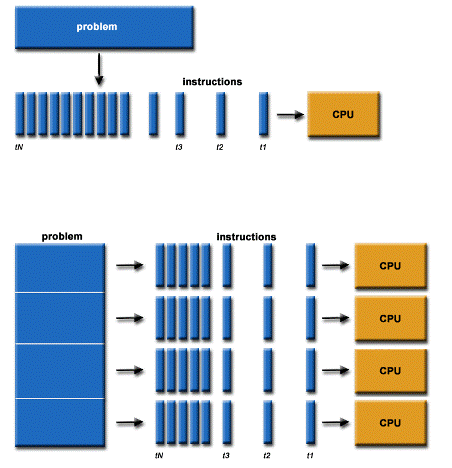
Parallel computing is a form of computing in which many instructions are carried out simultaneously. Parallel computing operates on the principle that large problems can be divided into smaller ones, which may be carried out concurrently. Multi-core processors have the potential to run applications more efficiently than single-core processors—giving users the ability to keep working even while running the most processor intensive tasks in the background.
The ability to do complex, multi-tasked workloads, such as creating professional digital content while checking and writing e-mails in the foreground, and also running firewall software or downloading audio files off the Web in the background, will allow consumers and workers to do more work in less time
Multi-threaded software applications—programs that run multiple tasks (threads) at the same time to increase performance for heavy workload scenarios, such as data mining, mathematical analysis, and Web serving, are already positioned to take advantage of multi-core processors
Next-generation software applications will require the performance capacity provided by multi-core processors. Software destined to break barriers in the user experience, like voice recognition and/or artificial intelligence (AI), will be possible with multi-core processors
With the success of dual-core and the advantages it brought, the battle for quad-core and beyond has been raging. AMD quad-core will be out shortly and Sun is already shipping its 8-core Niagara chip. We are clearly moving down the path to tens or even hundreds of cores. The key to leveraging this hardware trend will of course be in the software. Multi-cores are only as valuable as the multithreading software running on them.
|