However, technological development costs are extremely
high and so are business risks. Certain questions arise:
 The first major problem HDTV has is competition with other forms of digital
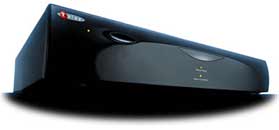
television. For example, two companies are developing "smart TV"
boxes. They are VCR type devices that digitally record and store
TV shows. They are being developed by RePlay
Networks, Inc., and Tivo Inc.
The advantage of smart boxes over HDTV is the price. It sells for
$500 to $1,000 for a box. In contrast HDTV costs between $6,000 and
$12,000 a piece. There is a tremendous drive for these "smart boxes"
to succeed. For example, Microsoft Corp. co-founder Paul Allen has
invested tremendously in these two companies through his venture company.
The first major problem HDTV has is competition with other forms of digital
television. For example, two companies are developing "smart TV"
boxes. They are VCR type devices that digitally record and store
TV shows. They are being developed by RePlay
Networks, Inc., and Tivo Inc.
The advantage of smart boxes over HDTV is the price. It sells for
$500 to $1,000 for a box. In contrast HDTV costs between $6,000 and
$12,000 a piece. There is a tremendous drive for these "smart boxes"
to succeed. For example, Microsoft Corp. co-founder Paul Allen has
invested tremendously in these two companies through his venture company.

 HDTV's main problem is it's PRICE. It is way to high. It starts
at $5,000 and goes up tremendously. Right now their is hardly transmissions
of HDTV, and the price is so high. Therefore there is not a market.
They are not selling. Recently, Consmer Reports rated HDTVs.
They determined that it is a great product. However, due to the price,
they reccomended buying conventional television sets.
HDTV's main problem is it's PRICE. It is way to high. It starts
at $5,000 and goes up tremendously. Right now their is hardly transmissions
of HDTV, and the price is so high. Therefore there is not a market.
They are not selling. Recently, Consmer Reports rated HDTVs.
They determined that it is a great product. However, due to the price,
they reccomended buying conventional television sets.
Another factor in the resistance of the "HDTV Revolution" is the use of
cable companies to transmit the HDTV signals. The question is will they
do it. They may compress the signals, to save channel space; thus
saving them money. This will decrease the quality of picture.
Why would the cable companies give a full out signal, when they can save
and make more money by compressing the signal. There is no incentive.
In addition, the computer industry sees profits to be made with HDTV technology
and is getting in the act. Not only will HDTV have an impact on home
TV viewers, but it will also affect PC users. They will be able to
receive digital transmission thru the computer. This opens a completely
new market. PC users will now be able to view full motion video.
For example, Sony just produced a HDTV computer monitor called the GDM-W900.
The only problem with the integration of HDTV with PCs and TVs is a battle
regarding the technology. Both sides want a different scanning standard.
Both are afraid that if HDTV uses one standard, it will infring on their
technology, and they will lose their market.
If HDTV takes off there is tremendous profits to be gained. In 2006,
the federal government will require broadcasters to turn off their regular,
analog TV transmissions. This will 250 million American tvs obsolete
in seconds. Thus the idea is, that with America's demand for television,
there will be a huge demand for the new and improved HDTVs. According
to a US News
& World Report article the costs of replacing the obsolete televisions
with new HDTVs will be at least $125 billion. However, there are
arguments that the government will not enforce the 2006 shutoff because
too many people will be pissed off and there will be hell to pay.
For example, imagine finding out that your congressman was a part of the
shutoff that occurred during the Super Bowl with three minutes remaining
and a tied game.
 Home cable companies networks are leading the way of HDTV transmissions.
They are trying to pounce on the new technology before others. CBS
agreed to a deal with Time Warner Cable. In this agreement, money
is not a term. They pretty much agreed to help each other out.
The cable company will transmit HDTV broadcasts to its 14 owned stations.
The transmissions will begin in New York City, Los Angeles, Houston, Philadelphia,
and Chicago. Additionaly, Time Warner wants to send broadcasts of
HBO digital. They believe there is a huge market for personal home
viewing of digital movies. The two companies are banking on the belief
that HDTV sets will have come down in price by the time the transmissions
are set to begin in 2000. HDTV set producers are also banking on
this partnership. They believe the NFL, which CBS carries games,
will open a new expanded market. They believe that men watching these
better broadcasts of the NFL will entice them to buy this new technology.
In addition, last year the opening game of the Texas Rangers Baseball Season
was broadcast on HDTV sets in local Circuit City stores. They were
trying to tap into the male market, which is more likely to cough up the
thousands of dollars that these products cost. NBC is also working
on a similar agreement in order not to fall behind.
Home cable companies networks are leading the way of HDTV transmissions.
They are trying to pounce on the new technology before others. CBS
agreed to a deal with Time Warner Cable. In this agreement, money
is not a term. They pretty much agreed to help each other out.
The cable company will transmit HDTV broadcasts to its 14 owned stations.
The transmissions will begin in New York City, Los Angeles, Houston, Philadelphia,
and Chicago. Additionaly, Time Warner wants to send broadcasts of
HBO digital. They believe there is a huge market for personal home
viewing of digital movies. The two companies are banking on the belief
that HDTV sets will have come down in price by the time the transmissions
are set to begin in 2000. HDTV set producers are also banking on
this partnership. They believe the NFL, which CBS carries games,
will open a new expanded market. They believe that men watching these
better broadcasts of the NFL will entice them to buy this new technology.
In addition, last year the opening game of the Texas Rangers Baseball Season
was broadcast on HDTV sets in local Circuit City stores. They were
trying to tap into the male market, which is more likely to cough up the
thousands of dollars that these products cost. NBC is also working
on a similar agreement in order not to fall behind.
HOME